

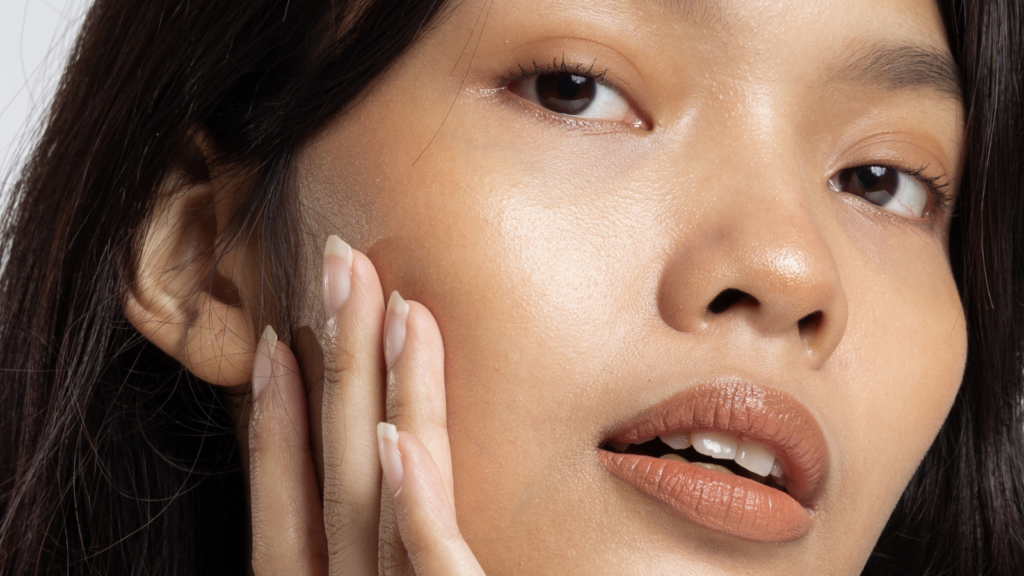
It’s not that collagen is being sidelined. Collagen maintains its position of importance in the world of beauty and aesthetics. However, there’s a new ‘it’ factor which is now sharing the stage with collagen, and this is the skin barrier.
This remarkably thin layer sits on the very surface of the skin, yet it has an enormous influence on how healthy, radiant and youthful the complexion appears.
A compromised skin barrier can make even collagen-rich skin look dull, dehydrated and prematurely aged. Many experts now believe that preserving this protective layer is just as important as stimulating collagen beneath it! That’s a bold statement to make but it is scientifically-backed. We’ll explain why.
The skin barrier, also known as the stratum corneum, is the outermost part of the epidermis. It is often compared to a brick wall, where skin cells form the bricks and lipids such as ceramides, cholesterol and fatty acids act as the mortar that holds everything together.
Despite being only fractions of a millimetre thick, it performs several vital functions. It locks moisture into the skin, protects against pollution and bacteria, shields deeper tissues from UV radiation and helps maintain the skin’s natural balance.
When the barrier is healthy, skin feels comfortable, smooth and resilient. When it becomes damaged, the effects can be surprisingly visible.
Moisture escapes more easily through a process known as transepidermal water loss, while irritants penetrate the skin more readily, triggering inflammation and sensitivity. The result is persistent dryness, tightness after cleansing, redness, flaking, rough texture, enlarged-looking pores and a complexion which appears tired rather than luminous. These changes can make the skin look older!
Dehydrated skin lacks the plumpness needed to reflect light evenly, causing fine lines and wrinkles to become more noticeable. What many people assume are permanent signs of ageing may, in some cases, be aggravated by a weakened skin barrier.
While repairing the skin barrier cannot erase deep wrinkles in the way injectable treatments or ablative laser procedures can, it can significantly improve the appearance of early ageing.
A Shift Within Aesthetic Medicine
This growing appreciation for barrier health has prompted a shift within aesthetic medicine.
For many years, stronger exfoliation was viewed as the quickest route to smoother skin. Today, many practitioners recognise that over-exfoliation can weaken the very layer responsible for protecting the skin. Rather than constantly removing the outer layer, treatment strategies are now focusing on strengthening and preserving it.
One technology which reflects this changing philosophy is Emfusion.
Emfusion is a non-invasive facial developed by BTL Industries. Instead of relying on chemical acids to exfoliate the skin, the treatment uses the company’s patented DYNAMiQ technology. This delivers gentle sonic waves to the epidermis.
The controlled micro-vibrations encourage the movement of calcium ions towards the upper layers of the skin, helping restore the natural calcium gradient that supports healthy barrier formation and repair. According to the manufacturer, this process encourages healthier barrier function while providing gentle cleansing and hydration without damaging sensitive skin.
What I love about Emfusion is that it is a lunch-time treatment, which means you can literally go in for the treatment during your lunch hour. It takes just 45 minutes. It also has no downtime, which means patients can return straight to the office after having the treatment administered. Also, it requires no anaesthetic.
Patients typically describe feeling gentle suction and mild vibrations rather than discomfort, making it suitable for those who find traditional exfoliating facials too harsh. Temporary redness or tightness may occur but usually settles within a few days.
The team from London’s Yuki Clinic, which offers the Emfusion Facial, describe it as ‘gentle cleansing without acids’ and explain that the treatment is ‘designed to restore and strengthen the skin barrier layer.’ The clinic’s staff also note that unlike many traditional facials, Emfusion concentrates on the skin’s outermost protective layer, helping improve hydration and resilience while requiring no recovery time.
It must be noted that while professional treatments can certainly support barrier repair, daily habits remain equally important. Using gentle cleansers, avoiding excessive exfoliation, applying moisturisers rich in ceramides and barrier-supporting lipids, wearing sunscreen every day and introducing active ingredients gradually all help preserve the skin’s natural defences.
In addition, lifestyle choices such as getting enough sleep, eating a balanced diet, managing stress and avoiding smoking also contribute to a healthier skin over time.
These are indeed interesting times in beauty and aesthetics. I was so sure that collagen would never have another star on stage with it. However, on reading up on the skin barrier, it seems it deserves all the attention it is gaining.
As researchers unpack the complex, wondrous structure of the skin and learn about its brilliance in greater detail, I believe we expect even more exciting twists and turns in the beauty and aesthetics journey. However, for now, you’re going to want to welcome all things related to skin barrier as part of your beauty repertoire.