

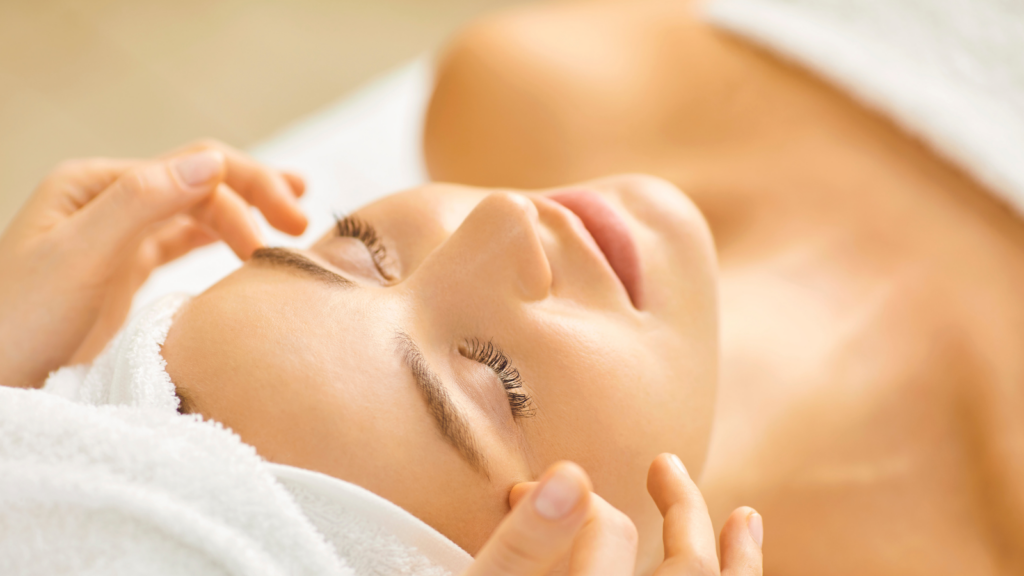
A few years ago, we didn’t know what an ‘exosome’ was. In the near future, this could be the word on everyone’s lips.
For more than two decades, Botox has stolen the spotlight as far as anti-ageing has been concerned. Its rise has reshaped how wrinkles are treated and how ageing itself is managed. By temporarily reducing muscle movement, Botox softens expression lines and creates smoother skin within days. It is predictable, widely accessible, and clinically well understood.
However, its rise hasn’t been without criticism. Many are wary of the ‘frozen face’ look associated with reduced facial movement and the diminished expressiveness often caused by Botox.
Into this arena steps exosome treatment. It’s not Botox and it doesn’t pretend to be… however, it seems it is stealing the spotlight from Botox as the ‘it’ treatment of makeovers.
Exosomes are tiny extracellular vesicles involved in cellular communication and repair. While still an emerging field in aesthetics, exosome treatment is being explored for its potential to improve skin quality, reduce inflammation, and support tissue regeneration without altering muscle activity.
Researchers and beauty enthusiasts are asking the provocative question: Could regenerative therapies eventually replace muscle-freezing treatments entirely?
At first glance, Botox and exosomes are not competing on the same level. They work through fundamentally different mechanisms. Botox interrupts the signal between nerve and muscle, temporarily limiting contraction. This is what smooths dynamic wrinkles caused by repeated facial movement.
Exosomes, by contrast, do not interfere with muscle activity. Instead, they are thought to influence cellular behavior by delivering proteins, lipids, and genetic material which may help regulate inflammation, healing, and regeneration.
Botox represents a mechanical solution to signs of ageing. If movement creates wrinkles, reduce the movement.
Exosomes represent a biological solution. If skin quality declines with age, support the systems that maintain and repair it.
Botox manages expression, through limiting movement. Exosome treatment attempts to improve the underlying tissue environment.
For many years, Botox has been considered the gold standard for treating expression lines precisely because it works so reliably. Patients see results quickly, often within days, and the effects are well documented. However, it does not address skin texture, elasticity, or the broader biological changes associated with ageing. It treats the visible outcome rather than the underlying process.
Exosome treatment, however, offers a different approach. In aesthetic settings, exosome treatment is often used alongside procedures such as microneedling, laser treatments, or skin resurfacing. Early research reports suggest improvements in radiance, hydration, and overall skin quality rather than immediate structural change. Importantly, exosomes do not reduce facial movement. The face continues to express emotion naturally, which is a key point in the growing conversation about authenticity in aesthetics.
For a growing number of patients, particularly younger demographics, the goal of aesthetic treatment is to look healthy, rested, and natural. The idea of limiting facial expression is becoming less appealing, especially in an era where individuality and authenticity are highly valued. Social media has accelerated this trend, as highly altered or ‘overdone’ aesthetics are often quickly identified and criticised.
This does not necessarily mean Botox will disappear. It remains one of the most effective treatments for dynamic wrinkles and continues to have a strong safety and efficacy profile. However, its role may evolve. Instead of being a first-line preventive treatment for younger patients, it may become one option among many, used more selectively or later in an individual’s aesthetic journey.
Could Exosomes Lead A New Era Of Aesthetics?
There are those, however, who believe exosomes could be the ‘leading lady’ in a new era of aesthetics, involving what has been called ‘The Invisible Makeover’. As its name suggests, this is the sought-after look, which appears so natural, no-one even knows that any work has been done!
For decades, cosmetic procedures were defined by visible transformation and enhancement. If someone had been for a treatment, you would ask them: “Girl! Did you have work done?” It was noticeable.
Still, the irony is that while artificial intelligence is being rolled out, there has been something of a protest against what appears ‘done’ or artificial in the realm of beauty and aesthetics. ‘Authenticity’ has become the new fake, and imperfect perfection, the new perfection.
With this, has come the desire to enhance what nature has given you, rather than adjust this into something unrecognisable. So it’s only natural that exosome treatment is gaining such a large following.
With exosome treatment, the result may not be a visibly ‘different’ face, but a subtle improvement in how the skin functions and appears in everyday life.
Professionals in the field have highlighted how this creates a new aesthetic language where healthy, rested, or vibrant have become the new beautiful. If this trajectory continues, the future of aesthetics may be defined less by visible intervention and more by imperceptible enhancement.
The future remains unknown but it’s always interesting to see how new technologies and research are shaping industries, and this includes the beauty industry.