

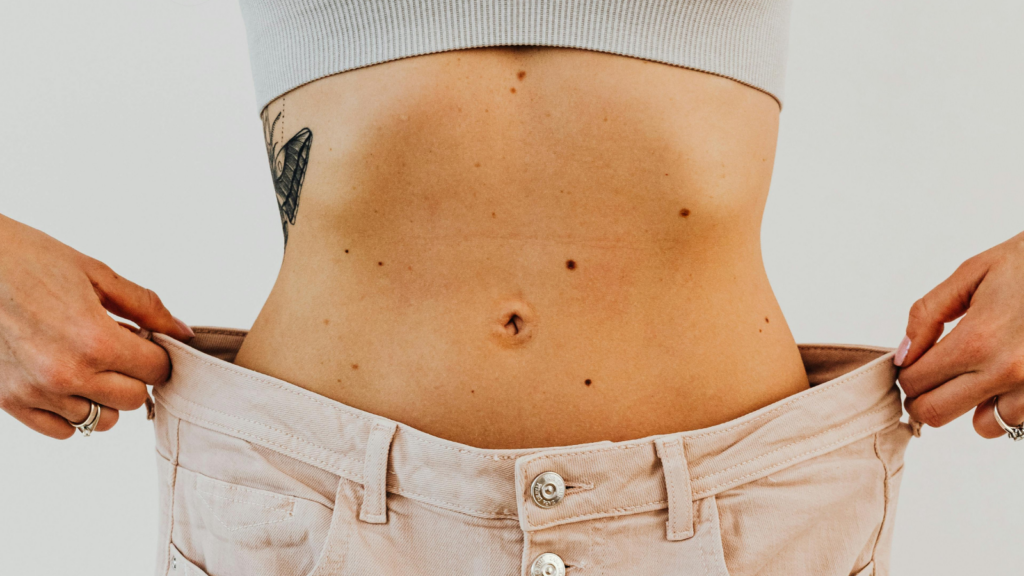
After significant weight loss, pregnancy, or simply the natural ageing process, many people find themselves staring at their midsection and asking whether the changes are a result of loose skin, or stubborn fat?
Misidentifying the problem can lead consumers down an expensive path of ineffective treatments, unrealistic expectations, and considerable frustration.
According to aesthetic practitioners, one of the most common mistakes patients make is assuming that every fold, bulge, or wrinkle around the abdomen is loose skin. In reality, many people are dealing with a combination of excess skin, residual fat deposits, weakened abdominal muscles, and age-related changes in skin elasticity.
Loose skin and stubborn fat require very different treatment approaches. Loose skin occurs when the skin has been stretched beyond its ability to fully retract. This often happens after pregnancy, major weight loss, or years of carrying excess weight. The skin’s collagen and elastin fibres become damaged or weakened, leaving behind tissue that hangs, folds, or creases.
Stubborn fat, on the other hand, is living tissue that remains resistant to diet and exercise. These fat deposits can accumulate around the lower abdomen, flanks, and waistline even in otherwise healthy individuals.
We found some surprisingly simple assessments to provide valuable clues about what is actually happening beneath the surface.
The Pinch Test
While only a qualified medical professional can provide a definitive assessment, many practitioners use a variation of what is commonly called the ‘pinch test’ during initial consultations.
Here’s how it works. Stand in front of a mirror and gently pinch the area that concerns you most. If the tissue feels thick, dense, and substantial between your fingers, there is likely a significant amount of fat present.
If the tissue feels thin, crepey, and almost paper-like when lifted, loose skin is likely the dominant issue.
Another clue is what happens when you release the pinch. Younger, healthier skin typically snaps back quickly. Skin with reduced elasticity may remain wrinkled for several seconds before gradually smoothing out.
Of course, most people fall somewhere in the middle. The majority of abdominal concerns involve both skin laxity and residual fat, making professional evaluation especially important.
The ‘Bend Forward’ Check
Another useful indicator involves observing the abdomen while bending forward. When excess skin is the primary concern, loose folds tend to hang downward and become more pronounced in a flexed position.
When stubborn fat is the main issue, the abdominal contour often remains relatively rounded and consistent, regardless of body position. Again, this is not a diagnostic tool, but it can provide valuable insight into whether the problem is structural skin laxity or retained fat tissue.
Why Weight Loss Doesn’t Always Solve the Problem
One of the biggest misconceptions in body aesthetics is the belief that additional weight loss will automatically tighten loose skin. Unfortunately, skin does not always behave that way.
The skin’s ability to retract depends on several factors, including age, genetics, sun exposure, smoking history, nutritional status, and how long the skin remained stretched.
Someone who loses 15 kilograms may see substantial skin recovery. Another individual who loses 50 kilograms after years of obesity may experience significant excess skin that cannot fully retract on its own.
This explains why some people achieve a firm, toned abdomen after weight loss while others continue to struggle with loose folds despite reaching their goal weight.
The Rise Of Non-Surgical Solutions
The growing demand for body contouring has led to an explosion of non-surgical treatment options designed to address mild to moderate skin laxity. Radiofrequency devices work by delivering controlled heat into deeper layers of the skin, stimulating collagen production over time.
High-intensity focused ultrasound (HIFU) targets deeper tissues to create a tightening effect which gradually develops over several months.
Microneedling combined with radiofrequency has become increasingly popular for improving skin texture and firmness on the abdomen.
While these technologies can produce meaningful improvements, they are not miracle solutions. Results tend to be most noticeable in individuals with mild to moderate skin laxity rather than severe excess skin.
When Fat Reduction Makes More Sense
If stubborn fat is the dominant issue, skin-tightening procedures alone may offer disappointing results.
In these cases, fat-reduction treatments such as cryolipolysis, injectable fat-dissolving treatments, or liposuction may be more appropriate. However, reducing fat can sometimes reveal hidden skin laxity that was previously masked by volume beneath the skin.
This is why experienced practitioners increasingly recommend combination approaches that address both concerns simultaneously.
The Combination Challenge
Modern aesthetic medicine recognises that very few abdominal concerns exist in isolation.
A patient may have mild skin laxity, residual lower abdominal fat, stretch marks, muscle separation following pregnancy, and age-related collagen loss
Treating only one component often leads to incomplete results. Comprehensive consultations now frequently include body composition assessments, skin elasticity evaluations, and discussions about realistic expectations before any treatment plan is developed.
Treating The Right Problem
The question isn’t whether loose skin or stubborn fat is easier to treat. The real question is whether you’re treating the right problem. A simple pinch test, combined with an honest assessment of your skin quality, body composition, and treatment goals, can provide valuable clues before you spend money on procedures that may not address the underlying issue.