

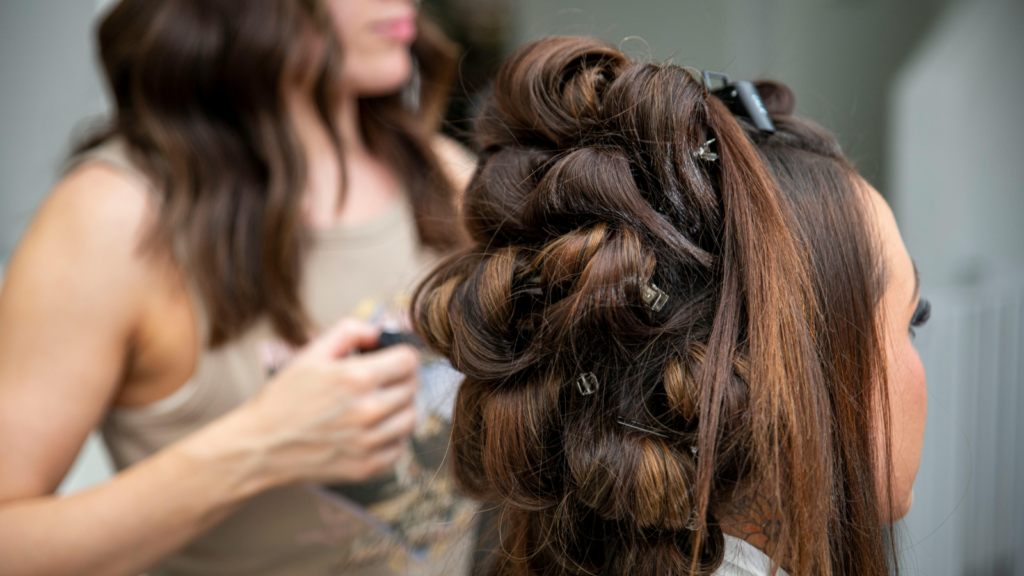
I was a small child in the eighties, but my memories of ‘big hair’ have never quite been erased. Then, it was all about curls and volume; and letting your hair say what you could not say yourself. The methods we used to create this volume weren’t always great for our hair. We teased our hair. We permed it. We used hair spray… lots of it. It was like this: the bigger, the better.
I was still very small, but I remember looking through pop music magazines and annuals and seeing the stars of the day sporting exceptional hair. They wore it like crowns on their head.
So, on reading that ‘big hair’ is once again trending, something nostalgic in me was stirred up.
Only, unlike the eighties where you did what you had to get your hair to stand out and speak volumes, this new big hair trend is focused on creating volume and style; while maintaining hair health (none of the eighties’ shortcuts).
The new trend includes voluminous blow-dries, sculpted curls, fuller-looking lengths and the desire for hair that appears healthy, thick and full of movement. This trend reflects a wider interest in youthfulness, confidence and the way hair can transform the appearance.
Beauty and aesthetics professionals are also asking whether this renewed interest in big hair could encourage more people to explore scalp care, hair restoration and treatments designed to improve density.
Why Volume Has Such A Powerful Effect
A full head of hair has long been associated with vitality. While hair density naturally varies from person to person, changes in thickness and volume can influence how people perceive their appearance.
Hair can become finer with age, while hormonal changes, genetics and certain medical conditions may contribute to thinning. The result is not always obvious hair loss. Sometimes, the hair simply appears less substantial than it once did.
This is one reason the return of the bouncy blow-dry is so interesting.
A hairstyle with volume at the roots, movement through the lengths and a glossy finish can create the impression of fuller hair without requiring a dramatic change. It can also frame the face differently, making the overall appearance seem more lifted and polished.
So what is the easiest way to create fuller-looking hair?
Having the right haircut is an important starting point if you desire fuller-looking hair. Hair which is too long or weighed down by excessive layering may appear flatter, particularly if it is fine.
A skilled hairstylist can recommend a shape which creates movement while preserving as much density as possible.
For some people, a blunt or softly layered cut can make the ends appear fuller. Others may benefit from shorter layers around the crown or face.
The best option depends on the natural thickness, texture and condition of the hair.
Styling can also make a considerable difference.
A volumising mousse applied to the roots before blow-drying can help create lift. Lightweight sprays and root-lifting products may provide a fuller appearance without weighing the hair down.
A useful method is to blow-dry the roots in the opposite direction to which the hair naturally falls. Once dry, the hair can be gently directed back into place.
Velcro rollers can also create volume and movement, particularly when used with moderate heat.
However, excessive heat can damage the hair shaft. A heat-protectant product, lower temperature and careful handling are important, especially for fine or fragile hair.
The objective is volume without sacrificing the condition of the hair.
If you have fine hair, you might feel somehow excluded from this trend. However, we discovered a few treatments which can help to improve the appearance of thinning hair. Here they are:
Minoxidil
Minoxidil is an established treatment for certain types of hair loss, particularly androgenetic alopecia, also known as pattern hair loss.
It is available in topical formulations and, in some circumstances, oral formulations prescribed by a doctor. It works by influencing the hair-growth cycle and may help some people maintain or improve hair density.
Results are not immediate. Treatment generally requires consistent use over several months, and not everyone responds in the same way.
It is important to establish the cause of hair loss before starting treatment. A dermatologist or healthcare professional can help determine whether minoxidil is appropriate.
Platelet-rich Plasma Therapy
Platelet-rich plasma, commonly called PRP, has become an area of interest in aesthetic and hair-restoration clinics.
The treatment involves taking a small sample of the patient’s blood, processing it to concentrate platelets and injecting the preparation into areas of the scalp.
Platelets contain growth factors, which may influence tissue repair and the hair-growth environment. Some studies have reported improvements in hair density in people with pattern hair loss.
However, PRP is not a guaranteed solution. Protocols vary between clinics, and results depend on the individual, the cause of hair loss and the treatment approach.
Low-Level Light Therapy
Low-level light therapy, also known as photobiomodulation, uses low-intensity light to target the scalp.
Some devices are marketed for people with pattern hair loss. The proposed mechanism involves influencing cellular activity within the hair follicles.
Unlike surgery, the treatment does not involve removing or transplanting hair. However, the evidence is not equally strong for every device or type of hair loss.
Consumers should look for devices with appropriate regulatory clearance and discuss whether the treatment is suitable for their circumstances.
Hair Transplantation
For people with significant, persistent hair loss, hair transplantation may be an option.
The procedure involves moving hair follicles from a donor area, usually the back or sides of the scalp, to areas where hair has become thinner.
Two commonly discussed methods are follicular unit transplantation, or FUT, and follicular unit extraction, or FUE.
FUT involves removing a strip of skin containing hair follicles, while FUE involves extracting individual follicular units. Both are surgical procedures and require careful assessment.
A successful transplant depends on factors such as donor hair availability, the pattern of hair loss and the skill of the surgeon.
The Importance Of Protecting Hair From Damage
Unlike the eighties, there is a strong message that hair volume should not come at the expense of hair health.
Frequent heat styling, chemical processing and tight hairstyles can contribute to breakage. Hair that is already fragile may become more difficult to manage when subjected to repeated stress.
A few simple habits can help. Use a heat protectant before blow-drying or using heated tools. Avoid excessive heat and allow the hair to dry naturally when practical. Choose a shampoo and conditioner suited to the hair type and avoid vigorous rubbing with a towel.
For people with fine hair, heavy oils and rich styling creams may weigh down the roots. Lightweight products can provide movement without making the hair appear greasy or flat.
Experts have called the big hair revival more than just a fashion moment, explaining that it reflects a broader shift in beauty towards health, longevity and personalised care. This is more than just eighties nostalgia… it’s about investing in your health, and wearing the crown on your head proudly, for all the world to see.