

For decades, aesthetic medicine has relied on what practitioners can see with the naked eye. Fine lines, pigmentation, laxity and redness have traditionally been assessed through visual examination, photography and patient history.
However, as technology has advanced, new possibilities for exploring skin health have emerged.
Among these is the technology which makes it possible to examine what lies beneath the skin’s surface. Here, lies a complex network of collagen fibres, elastin, blood vessels, immune cells and structural proteins which determine how skin ages, heals and responds to treatment.
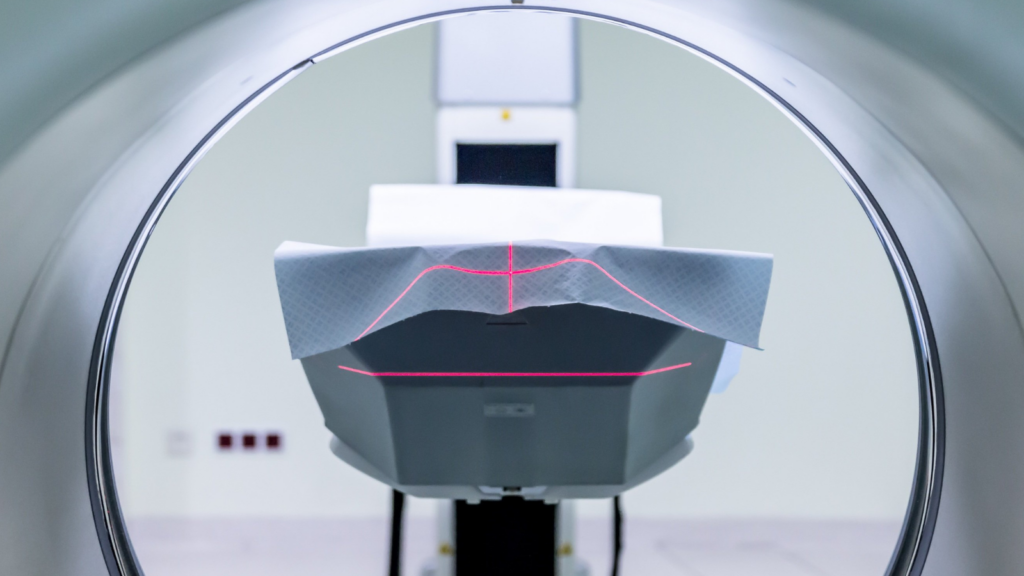
Beauty enthusiasts are excited about what researchers are calling ‘Skin MRIs’.They believe that in the future, a new generation of optical imaging technologies, which are capable of visualising living skin at microscopic resolution without the need for biopsies, could be available for use in beauty and aesthetics clinics. This would provide practitioners with detailed biological maps of the skin before deciding on treatment.
Some experts have called this technology the aesthetic equivalent of a ‘Skin MRI’.
Precision Aesthetics Takes Centre Stage
The idea of Skin MRIs reflects a broader trend within aesthetic medicine. Practitioners are increasingly interested in understanding the biological processes driving skin ageing.
Future devices may combine multiple imaging modalities into a single platform. A practitioner could simultaneously assess collagen density, vascular structures, pigmentation, epidermal thickness and inflammatory activity during a consultation lasting only a few minutes. Such comprehensive analysis could fundamentally change treatment planning.
Today’s aesthetic consultations often depend on experience, patient expectations and visible skin characteristics. While skilled practitioners achieve excellent results using these methods, hidden biological differences between patients frequently explain why treatments produce variable outcomes. Two individuals with similar wrinkles may have very different collagen quality, inflammatory profiles or rates of tissue ageing.
Advanced imaging could help explain these differences.
Rather than recommending the same laser resurfacing treatment for every patient with fine lines, practitioners may identify whether collagen fragmentation, vascular inflammation, elastin degradation or reduced cellular metabolism is the dominant concern.
Treatments could then be selected according to tissue biology instead of external appearance alone.
Researchers are investigating whether these technologies can identify the earliest signs of skin ageing before wrinkles become visible. Microscopic collagen fragmentation, low-grade inflammation and alterations in cellular metabolism may occur years before patients notice changes in the mirror.
Detecting these processes early could shift aesthetic medicine towards prevention rather than correction.
The technology may also transform product development.
Skincare companies currently depend heavily on clinical photography, questionnaires and invasive biopsies during research. Non-invasive imaging could allow scientists to observe how topical ingredients influence living skin in real time, accelerating the development of new formulations while reducing the need for tissue sampling.
Manufacturers of aesthetic devices may similarly use advanced imaging to demonstrate precisely how radiofrequency, ultrasound, lasers and regenerative treatments alter collagen architecture at microscopic level. This could improve scientific understanding while providing stronger evidence for treatment efficacy.
Skin MRI… Possibility Or Pipedream?
While there isn’t yet a true ‘Skin MRI’ available in aesthetic clinics, several treatments and diagnostic systems already use imaging technologies which are moving in that direction. These allow practitioners to look beneath the skin’s surface, assess tissue health or guide treatments more precisely.
Here are some of the leading examples:
Ultraformer MPT and other HIFU devices
High-intensity focused ultrasound (HIFU) devices such as Ultraformer MPT use ultrasound imaging principles to deliver energy at precise depths beneath the skin. Some medical HIFU platforms include real-time imaging to help practitioners visualise tissue layers before treatment, although most aesthetic versions do not display live images.
Ultherapy
Ultherapy remains one of the few mainstream aesthetic treatments that incorporates real-time ultrasound imaging. Practitioners can actually see the tissue layers before delivering focused ultrasound energy, helping ensure treatment is placed at the correct depth while avoiding important structures. This imaging capability is one reason Ultherapy has maintained a strong reputation for precision.
High-frequency ultrasound skin scanners
Dedicated diagnostic ultrasound devices, including systems from companies like DUB SkinScanner, can measure skin thickness, collagen density and scar tissue. These are used mainly in dermatology and research but are gradually appearing in advanced aesthetic clinics.
Multiphoton Microscopy
This is one of the most exciting technologies in longevity and aesthetic research. Multiphoton imaging allows scientists to visualise collagen fibres, elastin networks and even cellular metabolism deep within living skin. Companies such as Enspectra are working to commercialise this technology for broader clinical use, raising the possibility of future “Skin MRI”-style assessments.
VISIA Skin Analysis
Although VISIA doesn’t image beneath the skin in the same way as ultrasound or multiphoton microscopy, it uses multispectral photography to analyse pigmentation, pores, UV damage, vascular changes, texture and wrinkles. It has become one of the most widely used diagnostic tools in aesthetic clinics.
OBSERV Skin Analysis
OBSERV uses different wavelengths of light to reveal conditions that aren’t visible under normal lighting, including dehydration, inflammation, pigmentation and compromised barrier function. It helps practitioners identify issues before they become obvious on the skin’s surface.
3D Facial Imaging
Systems such as Vectra create highly detailed three-dimensional facial models that allow practitioners to analyse facial volume, symmetry and ageing patterns. While they don’t image internal tissues, they provide objective measurements for treatment planning and outcome assessment.
Back to the exciting possibility of Skin MRI. As hardware becomes smaller, software becomes more intelligent and clinical evidence continues to accumulate, today’s laboratory instruments could evolve into compact diagnostic devices suitable for everyday clinic use.
The emergence of a Skin MRI would represent far more than a technological upgrade. It would signal a philosophical shift in aesthetic medicine, moving the profession away from treating appearances alone and towards understanding the biology that creates those appearances.
It would definitely give meaning to the phrase, ‘Beauty is more than skin deep’.