

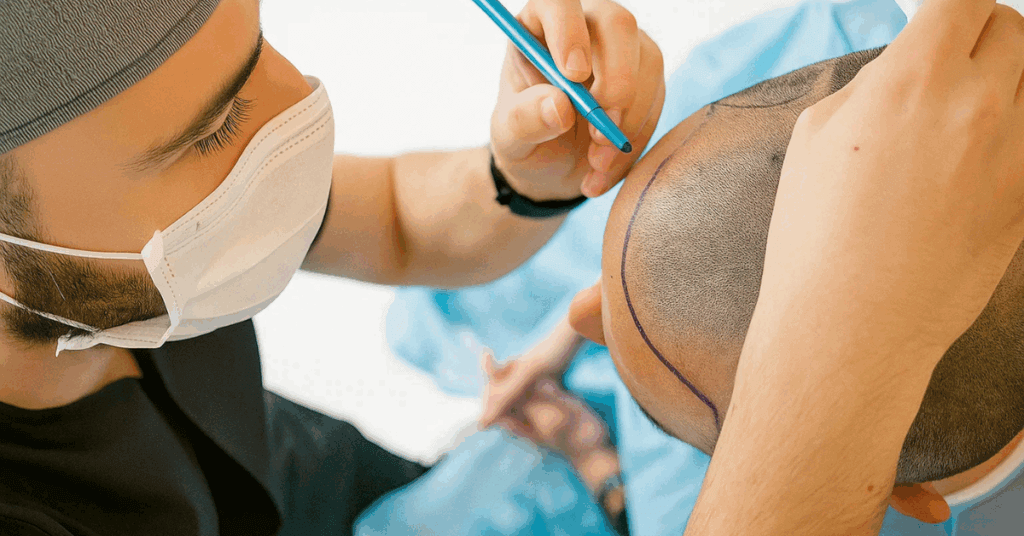
Has he or hasn’t he? We know not all rumours about Elon Musk are true. However, reports by hair experts note that Elon’s hairline has significantly transformed in recent years. Today, he sports a glossy crop of hair.
While he may never have confirmed having had a surgical hair transplant, searches for ‘Elon Musk bald’ are still reportedly trending. This is because many people are curious to see how Elon looked in the 1990s, when he showed signs of a receding hairline. Today, it seems Elon has put this receding hairline in the past. His shiny, glossy hair is clearly evident in mainstream media and social media posts.
It’s really none of our business what Elon chooses to do with his hair, but what all the searches relating to his suggested hair transplant surgery indicate is that many people want to do what he has done, and recover a youthful hairline.
There are other high flyers who have undergone surgical hair transplants. English footballer Wayne Rooney is possibly the most famous celebrity to have openly acknowledged his transplant. Other celebrities who now sport a full head of hair include Matthew McConaughey and John Travolta.
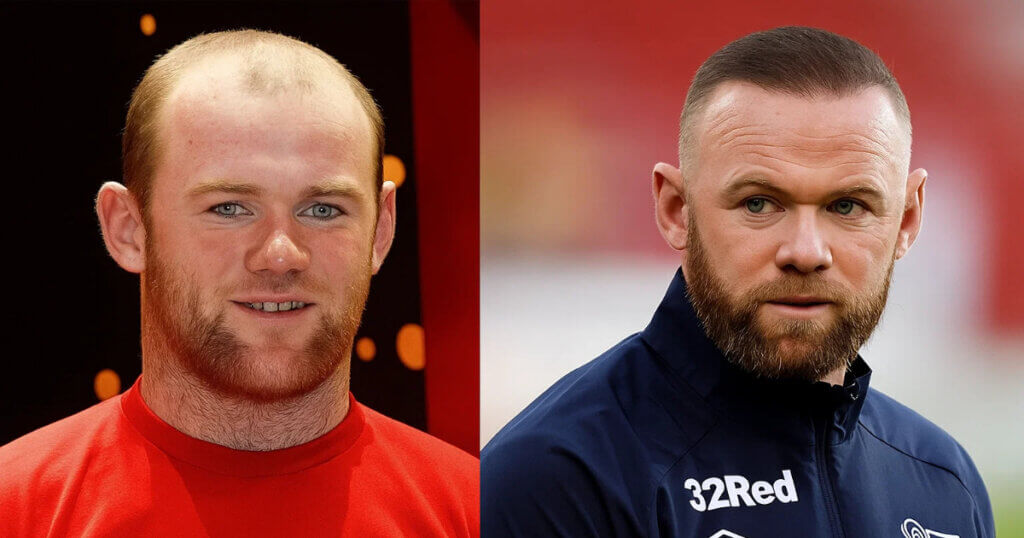
The news that celebrities also face receding hairlines and hair loss, and have sought assistance for these concerns, should reassure those feeling they are alone as they experience hair-related concerns. If it can happen to a celebrity, it can happen to anyone, is the generall thinking.
The Medihair platform recently provided statistics related to hair loss. According to the findings, around 85 percent of men, and around 33 percent of women will face hair loss. This means that hair loss impacts both men and women!
The study shows that women leading stressful lives (which is most of us) are 11 times more likely to suffer from hair loss. Hair loss is also impacted by menopause-related hormonal changes, with many women experiencing significant hair thinning after 50 years of age.
Taking Back Your ‘Crown’
Hair is called your ‘crowning glory’, and for this reason surgical hair transplants offer something of an answer to restoring this crown.
Surgical hair transplants are medical procedures that involve moving hair follicles from one part of the body to areas affected by hair loss. The hair follicles are usually taken from the back or sides of the scalp, where hair growth is most resistant to balding. They are most commonly transplanted to the crown, hairline, or temples.
While hair transplant surgery is most commonly used to treat male pattern baldness, it is also used for women with thinning hair.
There are two primary methods of hair transplantation. These are FUT (Follicular Unit Transplantation) and FUE (Follicular Unit Extraction).
FUT involves removing a strip of skin from the donor area, dissecting it into individual follicular units, and then implantation of these units into the balding areas.
FUE involves extracting individual hair follicles directly from the donor area using a tiny punch tool, and then implanting them one by one into the recipient site.
Both procedures are typically done under local anaesthesia and can take several hours, depending on the extent of the transplant. Patients are able to resume normal activities within a few days. However, they may need to avoid strenuous activity for a week or more.
A Journey Back In Time To Where It All Began
Hair transplantation has a surprisingly long history. The earliest attempts date back to the 1930s in Japan. Around this time, dermatologist Dr Shoji Okuda developed a technique for transplanting hair-bearing skin to treat burn victims.
However, the modern era of hair transplants began in the 1950s with Dr Norman Orentreich in New York. He demonstrated that transplanted hair retained the characteristics of the donor site. This is a principle known as ‘donor dominance.’
Throughout the 1980s and 1990s more and more hair loss treatment options were considered. Hair transplant techniques evolved significantly, moving away from the ‘doll’s hair’ look towards a more natural follicular unit grafting. The development of FUE in the early 2000s further refined the process, making transplants less invasive and reducing scarring.
If you’re suffering hair loss or considering a hair transplant, there is no shame involved. In fact, discussions around surgical hair transplants have become so normalised that public figures now speak openly about their procedures. British comedian Jimmy Carr once joked, “I’ve had a hair transplant. I was going bald, so I got one of those. No shame.” Similarly, Wayne Rooney tweeted in 2011: “Just to confirm to all my followers I have had a hair transplant. I was going bald at 25. Why not?”
These candid admissions have helped to destigmatise the procedure and made it more mainstream. It is not only becoming more popular, but is being embraced by both men and women!
The transplants are permanent and experts say they last a lifetime. So if your ‘crowning glory’ is feeling a little tarnished, then it’s time to restore your crown through some hair TLC and maybe even a surgical hair transplant. Again, it’s your crown and your decision, but as Wayne Rooney so openly expressed: “Why not?”