

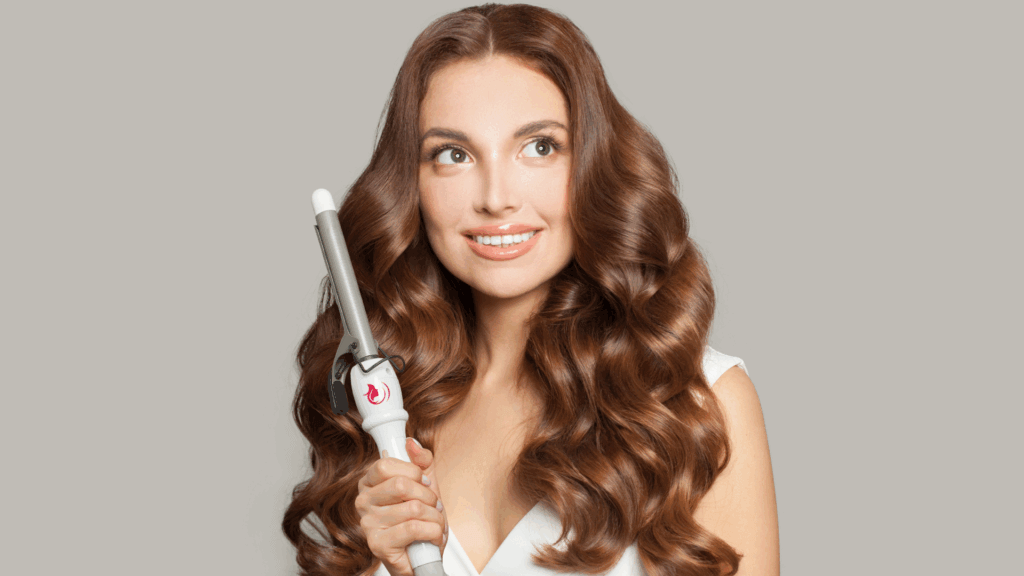
We’re no longer in the eighties when hair was pulled, tweaked, teased and heated up to create the ‘big hair’ effect. Heatless hair styling and ‘kind’ treatment of hair has again taken centre stage.
This movement is reshaping modern hair care routines. It is strongly supported by the rise of brands like Hair & Me and Glowlink, who are leading the charge in offering nourishing, health-conscious solutions for beauty lovers everywhere.
This new wave of beauty innovation offers a much-needed breath of fresh air as it offers an answer to the split ends, dryness and breakage which are a concern for those who regularly style their hair.
Hair advocates say this is more than just a passing fad. They say that heatless styling is an age-old practice. Even royal figures, among them Queen Elizabeth I, avoided excessive heat styling. She was known for her elaborate hairstyles, which were often created using wigs, braids, and natural setting techniques rather than direct heat.
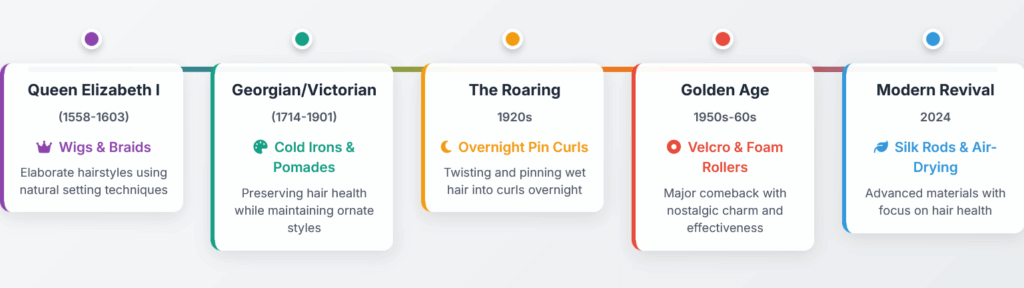
The Georgian and Victorian eras also saw women styling hair with cold irons and pomades, preserving the hair while maintaining ornate looks.
Heatless styling isn’t just about looking good. It’s about feeling good too. There are surprisingly many options available which offer damage-free styling alternatives to curling irons, straighteners and other heat-based styling methods. These range from overnight methods to minimalist air-drying routines.
Author Chanel Sequeira writes in an article in Elle: “I decided to try no heat styling, just to see how my naturally straight hair would respond. I braided it while it was damp before bed, not expecting much in terms of results. But to my surprise, I woke up with soft waves and a lovely natural texture. While the look didn’t last as long as heat styled curls, it added some much needed volume. It felt great to give my hair a break from heat while still having it look put together.”
The growing awareness of heatless styling has led to an industry-wide pivot toward alternatives which prioritise hair health without sacrificing style. According to a 2024 report by Mintel, over 45% of UK consumers expressed interest in haircare products and techniques which promote long-term hair health, with heatless methods listed among the top emerging interests.
The problem with heat is that excessive heat styling is associated with weakened hair cuticles, dryness, and long-term structural damage to the hair shaft. Temperatures from styling tools can exceed 200°C, far higher than what most hair can safely handle on a regular basis. The result is dehydrated hair which loses its shine, elasticity, and volume over time.
The Silk Rod Revolution
Silk curling rods have emerged as one of the most beloved heatless styling tools in the beauty world. Typically made from smooth silk or satin and wrapped around sections of damp or lightly misted hair, these rods are tied into place and left to set as the wearer sleeps. By morning, the result is soft, bouncy curls, with no heat required.
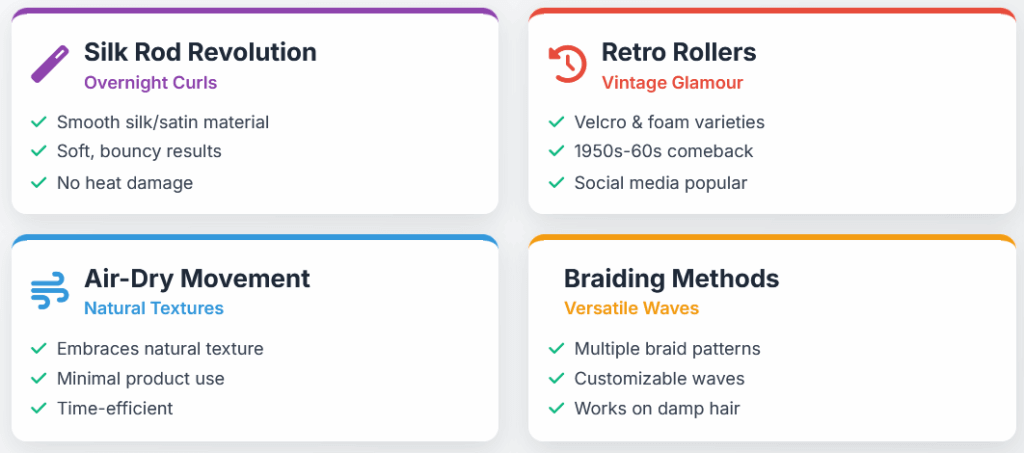
This method works through a process known as ‘wet setting’ or ‘cold setting’, where hair is shaped and held into a form as it dries. Unlike hot tools, which break hydrogen bonds in hair temporarily through heat, wet setting relies on reshaping the hair’s bonds as moisture evaporates.
Interestingly, this technique is not new. It’s a modern reinvention of methods used as far back as the 1920s, when women would twist and pin wet hair into curls overnight.
The Retro Glam Of Overnight Rollers
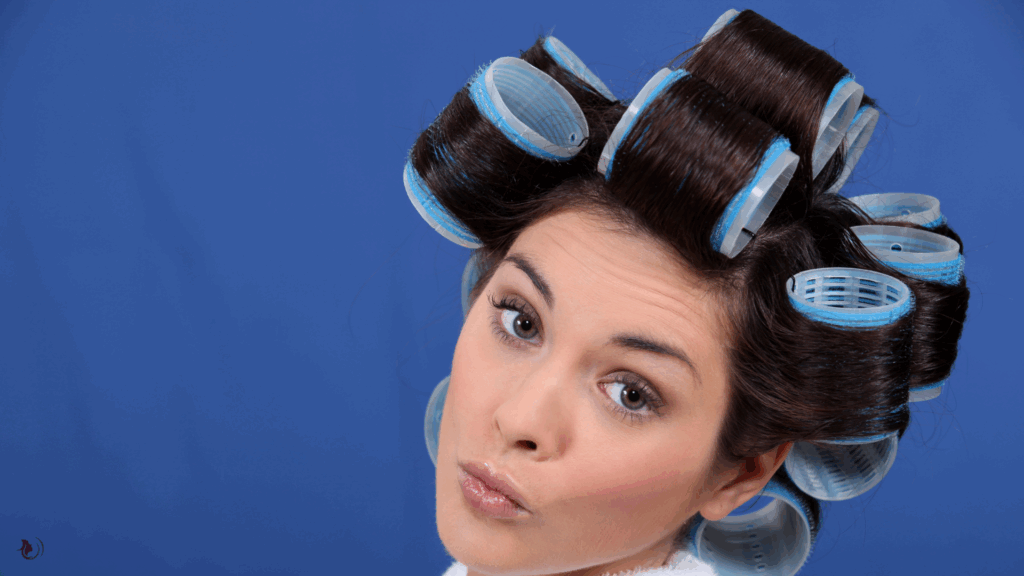
Velcro and foam rollers are enjoying a major comeback, thanks to both their effectiveness and nostalgic charm. Popularised in the 1950s and ’60s, these rollers are once again gracing vanities across the UK.
With this method, damp hair is wrapped around cylindrical rollers and left to dry, either overnight or for a few hours.
Modern innovations include flexible foam rollers, magnetic snap rollers, and even self-grip varieties which stay in place without pins or clips. Their resurgence can be attributed in part to social media, where beauty influencers have embraced their retro appeal and demonstrated impressive results.
The Air-Dry Movement
Perhaps the simplest of all heatless techniques is air-drying. This involves letting hair dry naturally without the assistance of blow dryers or diffusers. While this method may seem basic, its effectiveness lies in the preparation and product selection.
Air-drying works best when the hair is properly conditioned and supported with the right products. Anti-frizz serums, curl-defining mousses, and hydrating leave-ins can help achieve a sleek or styled look with minimal intervention.
What’s particularly exciting is the growing appreciation for natural hair textures. Rather than forcing hair into a specific style, many are now working with their texture rather than against it. This aligns with a broader shift toward authenticity in beauty. Today, curls are celebrated, as are kinks and waves.
This renewed focus on heatless styling owes much to the digital age. Social media platforms, among these TikTok and YouTube, have played a crucial role in popularising these techniques. Videos showcasing dramatic before-and-after transformations using heatless tools have resulted in millions of views.
One viral moment involved influencer @sarahshairtricks who used a silk robe belt to curl her hair overnight. This resulted in soft, voluminous curls. The method quickly gained traction, with hundreds replicating the look under the hashtag #heatlesscurls.
While trends come and go, you can’t go wrong protecting the health of your hair. As famous author and thought leader Maya Angelou said, “A woman’s hair is her glory.”