
Did you know that it is estimated that approximately 1 in 3 people worldwide are unhappy with the appearance of their nose?
According to a 2019 study published in JAMA Facial Plastic Surgery, approximately 30% of respondents expressed dissatisfaction with their nose. Interestingly, higher dissatisfaction was correlated with spending more time on social media and taking selfies.
This begs the question, why? Firstly, the nose is literally at the centre of the face. This prominent positioning means it is one of the first features people notice. Secondly, its size, shape, and alignment significantly affect overall facial symmetry and harmony.
That is why it should come as no surprise that in 2022, there were approximately 2,220 rhinoplasty procedures performed in the UK (among men and women), making it the sixth most common cosmetic surgery overall.
However, not everyone is willing to undergo surgery, nor does everyone have the budget or the time to take off from work for weeks on end. Therefore, over a recent 12‑month period, there were around 18,388 searches or inquiries for non-surgical rhinoplasty on WhatClinic.com, compared with roughly 20,426 for surgical rhinoplasty.
Because non-surgical nose jobs offer subtle tweaks to the nose without drastic recovery times. And it is tough not to love that. But, what are your options when it comes to a non-surgical rhinoplasty?
Option 1: Nasal Dermal Fillers

Dermal fillers are commonly used to restore lost volume in areas like the cheeks, under the eyes, and temples (as these areas often lose fat and fullness with age). However, they can also help define the jawline, chin, and cheekbones for a more sculpted appearance, and even subtly sculpt the nose.
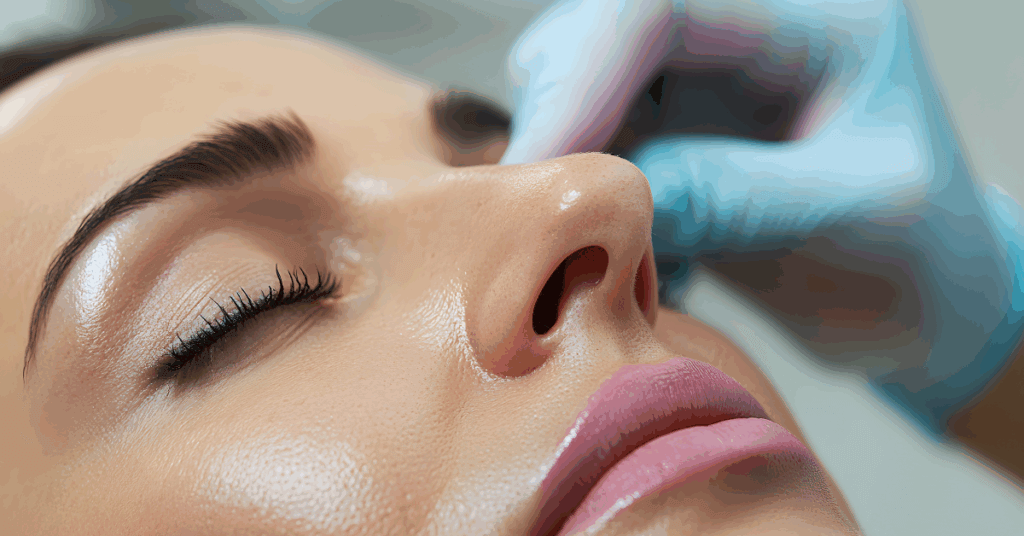
Nose fillers are typically made of hyaluronic acid (HA), a substance naturally found in the body, especially in connective tissues, skin, and eyes. Known for its moisture-retaining properties, hyaluronic acid is widely used in skincare products to hydrate and plump the skin. In non-surgical nose reshaping, this substance is injected with a fine needle or cannula into specific areas of the nose. By adding volume beneath the skin, the filler enables the practitioner to camouflage imperfections, smooth bumps or dips, enhance the Bridge, lift the nasal tip, and refine symmetry to give a more harmonious appearance.
Results are visible immediately and usually last between 6 and 12 months, depending on the product used and individual metabolism.
Option 2: Nose PDO Threads
Another highly popular non-surgical nose treatment is the use of PDO threads. This aesthetic procedure offers a relatively new approach to non-surgical nose enhancement.
Under local anaesthesia, a blunt cannula is used to insert dissolvable threads beneath the skin along the nasal bridge, tip, or septum. These threads act as scaffolding to lift and support the nasal structure. Unlike fillers, PDO threads not only provide mechanical lift but also stimulate collagen production, leading to longer-lasting results.
Over time, the body naturally absorbs the threads as it builds collagen around them. One major benefit is that these threads offer a natural-looking lift without adding volume. Results can last between 12 and 18 months.
PDO threads are especially effective for lifting a droopy nasal tip or creating a more defined nasal bridge, particularly in patients with a flatter nose profile, common among East Asian patients.
Option 3: Botox For Nose Refinement

Botox (botulinum toxin) can be used to refine the nose by relaxing specific muscles around the nasal tip and nostrils. By targeting these muscles, Botox can slightly lift a drooping tip, reduce the appearance of a wide or flared nostril, and smooth subtle asymmetries. It also helps smooth fine lines or creases around the nose (bunny lines).
The treatment typically requires only a few tiny injections, and results tend to appear within a few days. Plus, results can last about 3 to 4 months.
Not Sure Which To Choose?
| Feature | Dermal Fillers | PDO Threads | Botox |
| Composition | Hyaluronic Acid | Polydioxanone (Absorbable Suture) | Botulinum Toxin Type A |
| Duration | 6–12 Months | 12–18 Months | 3–4 Months |
| Volume Addition | Yes | No (Provides Lift, Not Volume) | No(Provides Lift, Not Volume) |
| Best For | Smoothing Bumps, Addressing Asymmetry | Lifting Nasal Tip, Defining The Bridge | Lifting A Drooping Nasal Tip, Reducing Nostril Flare |
Many leading aesthetic clinics report that approximately 5–10% of all filler procedures are non-surgical rhinoplasties. Patient satisfaction is consistently high, with over 90% of patients reporting positive results in multiple published surveys.
Moreover, a retrospective series of 332 cases involving non-surgical nasal remodeling with fillers, Botox, and PDO threads concluded that these treatments provide “good temporary results” with “satisfactory aesthetic outcomes and a very low incidence of complications.”
However, as impressive as the above statistics are, it goes without saying that you should always consult with a qualified professional beforehand. Simply because a skincare professional will assess your skin, your condition, your goals, and your medical history to create a perfect treatment plan that is safe and effective.
However, generally speaking, ideal candidates for a non-surgical rhinoplasty include those who are seeking subtle enhancements without the risks or recovery time associated with surgery. It is also ideal for individuals who want to correct minor bumps or asymmetry, have undergone a surgical rhinoplasty but require minor refinements, or wish to “test” a new nose shape before committing to surgery.
However, it is not suitable for individuals needing functional correction (such as a deviated septum) or significant reshaping.
Here Is What To Keep In Mind
Non-surgical rhinoplasty has, without a doubt, transformed the way people approach nose enhancement, offering safe and effective alternatives to traditional surgery.
Whether you choose dermal fillers to smooth bumps and refine contours, PDO threads to lift and define the nasal bridge or tip, or Botox to subtly adjust nostril flare and tip position, these treatments provide natural-looking results tailored to your facial features.
In short: with minimal downtime, lower risk, and immediate or gradual visible improvements, non-surgical options allow you to achieve a more balanced appearance without the stress, cost, or recovery associated with surgical rhinoplasty.