

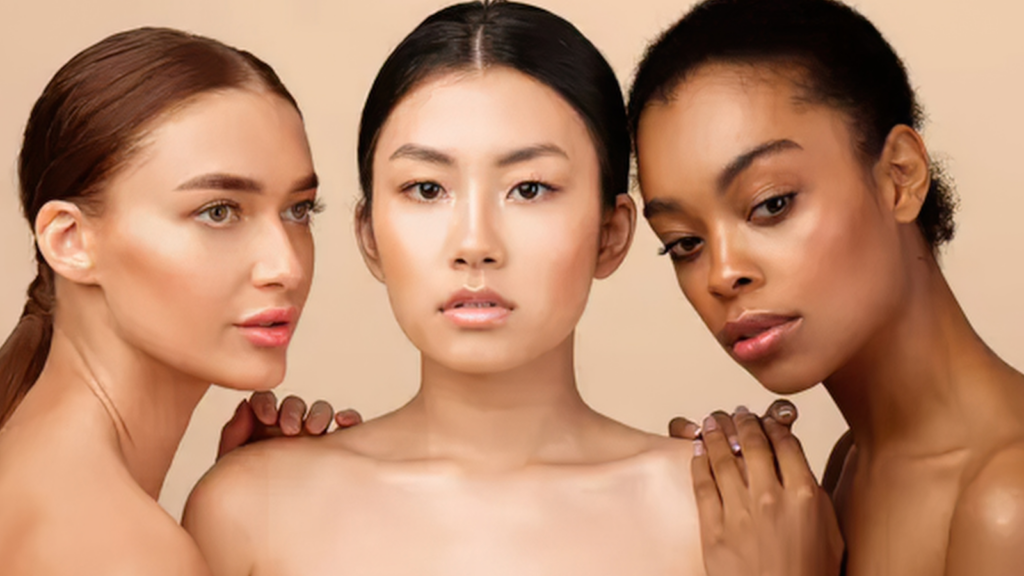
I live in South Africa where there are many different skin colours. This is one of the reasons we are known as the Rainbow Nation. We understand all too well that with beauty and aesthetics, different skin tones need to be considered.
It’s this way around the world. Our diversity is one of the reasons life is colourful and beautiful. At the same time, it is also the reason why technology needs variation and sensitivity.
An important question which continues to influence the aesthetic industry is how advanced laser treatments can deliver effective results across different skin colours without increasing the risk of pigmentation changes or skin damage.
Aesthetic practitioners work with patients representing a wide spectrum of skin tones, from very fair complexions to deeply pigmented skin; and for many years, certain laser treatments were approached with considerable caution in darker skin types.
The reason was not that darker skin could not benefit from laser technology, but that melanin, the pigment responsible for skin colour, changes how the skin responds to laser energy.
Advances in laser technology, a better understanding of skin physiology and more sophisticated treatment protocols have helped expand the possibilities for treating different skin colours.
One technology that offers interesting opportunities in this area is Fotona 4D Pro, a multi-dimensional laser rejuvenation treatment combining two wavelengths, namely Nd:YAG (1064 nm) and Er:YAG (2940 nm).
EC Clinic London’s Fotona 4D Pro is an advanced, non-surgical laser treatment designed to rejuvenate, tighten and lift the skin from within, helping achieve a firmer, smoother and more youthful appearance.
Combining two advanced laser wavelengths (Nd:YAG and Er:YAG), the treatment works across different layers of the skin through four specialised steps: SmoothLiftin, FRAC3, PIANO and SupErficial.
Together, these techniques aim to stimulate natural collagen production, improve skin elasticity, soften fine lines and wrinkles, refine enlarged pores, even out skin tone and enhance facial contours, particularly around the cheeks, jawline and neck.
The treatment’s technology also offers different settings which accommodate different skin colours and conditions; indicating how technology is evolving to allow for treatments which are more personalised.
Why Does Skin Colour Matter When Choosing a Laser Treatment?
The primary consideration when treating darker skin is melanin. Melanin is a natural pigment produced by melanocytes. It gives the skin its colour and provides some protection against ultraviolet radiation. However, it also absorbs certain wavelengths of laser energy.
This creates an additional consideration during laser treatments. If too much energy is absorbed by the melanin in the epidermis, rather than being directed towards the intended treatment target, unwanted heating can occur.
Potential complications can include post-inflammatory hyperpigmentation (PIH), where the skin becomes darker following inflammation or injury; hypopigmentation, where areas of skin become lighter; prolonged redness or inflammation; blistering and burns; and scarring in more serious cases.
These risks are particularly important in individuals with Fitzpatrick skin types IV, V and VI.
The Fitzpatrick classification is commonly used to describe how skin responds to UV exposure, ranging from very fair skin that burns easily to deeply pigmented skin that rarely burns.
Although useful, it is not a perfect measure of skin colour or laser safety. Two people with the same Fitzpatrick classification may have different pigmentation characteristics and treatment responses.
One of the challenges for aesthetic practitioners is therefore to identify whether someone has light or dark skin, in addition to understanding how their individual skin is likely to respond to the proposed treatment.
How Does Fotona 4D Pro Treat Different Skin Colours?
Fotona 4D Pro combines two laser wavelengths that interact with tissue in different ways.
The Nd:YAG wavelength of 1064 nm penetrates relatively deeply into the skin and is less strongly absorbed by epidermal melanin than shorter wavelengths. This makes it an important option in laser treatments involving darker skin types.
The Er:YAG wavelength of 2940 nm is strongly absorbed by water in tissue. It is primarily used for controlled superficial ablation and resurfacing, rather than targeting melanin directly.
The combination allows practitioners to address different aspects of skin ageing, including deeper tissue heating, collagen remodelling and superficial skin texture.
Importantly, the ability to adjust treatment parameters is central to adapting Fotona 4D Pro for different patients.
These adjustments may include:
Adjusting Laser Energy
The amount of energy delivered must be appropriate for the patient’s skin characteristics and treatment objective.
More conservative energy settings may be appropriate where there is an increased risk of pigmentation changes or thermal injury.
Modifying Treatment Intensity
The number of passes, treatment coverage and overall intensity can influence how much thermal stimulation the skin receives.
A more conservative approach may be appropriate for pigmentation-prone skin.
Selecting The Appropriate Treatment Modes
Fotona 4D Pro incorporates four treatment modes: SmoothLiftin™, FRAC3®, PIANO® and SupErficial™.
The practitioner can develop an individualised treatment plan based on which concerns need to be addressed and how the patient’s skin is likely to respond.
Managing Heat Accumulation
Controlling how energy is delivered is important. The practitioner must monitor the skin’s response and avoid excessive heat accumulation, particularly in patients who are more susceptible to post-inflammatory pigmentation.
Planning TheTreatment Course
Instead of pursuing aggressive results in one appointment, a more gradual treatment strategy may be appropriate for certain patients. Treatment intervals and subsequent sessions should be determined according to recovery and clinical response.
Why the 1064 nm Nd:YAG Wavelength Is Particularly Interesting
The 1064 nm Nd:YAG wavelength deserves particular attention when discussing laser treatments for darker skin.
Melanin absorbs shorter wavelengths more readily than longer wavelengths. The 1064 nm wavelength is absorbed less strongly by epidermal melanin and can penetrate more deeply into tissue.
This is one reason why long-pulsed Nd:YAG technology has become an important option in procedures such as hair reduction for patients with darker complexions.
It is also relevant to Fotona 4D Pro because the Nd:YAG wavelength forms part of its rejuvenation protocol.
However, it is important not to confuse different Nd:YAG applications. A long-pulsed 1064 nm hair-removal treatment is not the same as the Nd:YAG treatment modes used in Fotona 4D Pro. Their pulse characteristics, energy delivery and intended tissue effects differ.
The wavelength provides an important technological advantage, but it does not eliminate the need for individual assessment and careful treatment planning.
How Are Laser Treatments Being Adapted for Different Skin Colours?
The development of laser treatments for different colour skins is not limited to Fotona.
Researchers and practitioners have been exploring different ways to modify laser treatments to reduce the risk of pigmentation changes while maintaining clinical effectiveness.
Laser hair removal is one of the clearest examples of how technology has evolved to accommodate different skin colours.
Earlier hair-removal systems often used shorter wavelengths that were more readily absorbed by melanin in the epidermis. This increased the risk of burns and pigmentation changes in patients with darker complexions.
The introduction and wider use of long-pulsed 1064 nm Nd:YAG lasers helped address this challenge.
Acne scarring is another area where skin colour can significantly influence treatment decisions.
Ablative laser resurfacing, including traditional CO₂ and Er:YAG treatments, can produce impressive improvements in skin texture. However, the controlled injury created during resurfacing can trigger post-inflammatory hyperpigmentation, particularly in patients with Fitzpatrick skin types V and VI.
Treating pigmentation in darker skin requires a particularly careful approach.
Melasma and post-inflammatory hyperpigmentation are common concerns, but treating them aggressively can sometimes make the problem worse.
In selected patients, dermatologists may use low-fluence 1064 nm Q-switched Nd:YAG laser protocols, often referred to as laser toning.
Rather than attempting to remove pigmentation in one aggressive treatment, the approach uses gradual energy delivery over multiple sessions.
Practitioners may treat patients with European, Asian, Indian, mixed-ancestry and African skin backgrounds, each presenting with different pigmentation characteristics and individual skin concerns.Two patients with similar skin colours may also have very different skin characteristics, medical histories and treatment requirements.
Professionals from EC Clinic London explain that it’s because no two people are alike that treatments, including Fotona 4D Pro, begin with a personal consultation to assess skin concerns and suitability.