

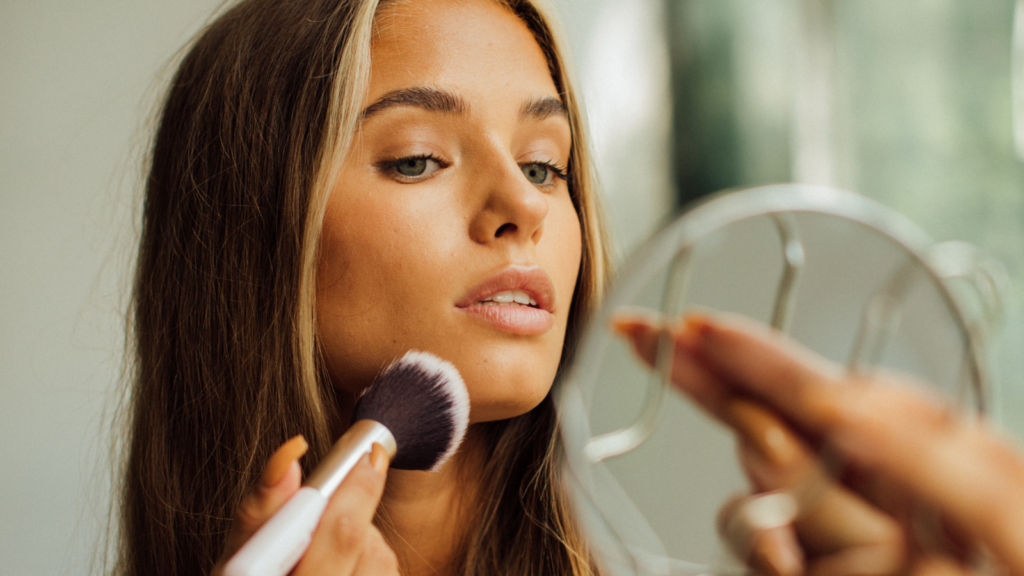
For several years, glass skin has dominated the beauty world. This is a trend inspired by Korean skincare, which celebrates an ultra-smooth, intensely hydrated complexion with a mirror-like finish.
You would have seen pictures of porcelain-faced beauties in magazines and on social media beauty campaigns who appear to have had their faces glossed with varnish and star-dust. At least that’s how they look to me.
It was with interest that I read about the new trend, ‘Cloud skin.’ Cloud skin favours a soft-focus, semi-matte finish which looks naturally radiant rather than highly reflective. Many dermatologists and aesthetic practitioners believe cloud skin may be particularly well-suited to mature skin.
If you are a little older and seek to glow up and present your best face to the world, then this article is for you.
Rather than striving for maximum shine, cloud skin embraces a more balanced approach. The complexion appears hydrated and luminous, but with a velvety finish which gently diffuses light. For women experiencing menopause or age-related changes in their skin, this subtle radiance may prove more flattering than the glossy appearance associated with glass skin.
Celebrity aesthetician Mimi Luzon, whose clients have included Sabrina Carpenter, Helena Christensen and Irina Shayk, recently described cloud skin as ‘a new era of glow,’ where skin looks ‘soft, diffused and effortlessly refined.’ She explains that the goal is healthy, breathable skin which showcases natural radiance without appearing oily or overdone.
Her philosophy reflects the industry’s move away from creating exaggerated cosmetic effects and instead focusing on improving skin quality itself.
Dr. Doris Day, a board-certified dermatologist based in New York, has frequently spoken about the importance of healthy skin rather than chasing trends. “Healthy skin is beautiful skin,” she has said, emphasising that good skin quality ultimately creates a more youthful appearance than excessive make-up or shine.
Working With Light To Dazzle Up
Beauty experts explain that the difference between glass skin and cloud skin lies largely in how light interacts with the surface of the skin.
Glass skin relies on maximum reflection. Layers of hydrating skincare, illuminating primers and dewy foundations create an almost wet-looking finish which reflects light intensely. When skin is naturally smooth and youthful, this effect can appear fresh and luminous.
Cloud skin, by contrast, aims to softly scatter light. Instead of producing mirror-like reflections, it gently blurs pores, fine lines and uneven texture. All this, while maintaining healthy-looking hydration beneath the surface.
This distinction becomes particularly important as skin ages.
Beginning in the mid-thirties, collagen production gradually slows. Elastin fibres become less resilient, while hyaluronic acid levels naturally decline. During menopause, falling oestrogen levels accelerate many of these changes, leading to thinner skin, increased dryness and reduced elasticity.
As these structural changes occur, the highly reflective finish associated with glass skin can sometimes emphasise enlarged pores, fine lines and uneven skin texture rather than disguising them.
A softly diffused finish often has the opposite effect. Professional make-up artists have long used satin finishes in photography because they reflect light more evenly across the face. Instead of highlighting every contour and texture change, semi-matte surfaces create a smoother optical appearance.
This principle has become increasingly important in aesthetic medicine, where practitioners frequently discuss the concept of skin quality alongside traditional concerns such as wrinkles and volume loss.
Skin quality refers to characteristics including hydration, elasticity, firmness, pore size, pigmentation and overall texture. Improvements in these areas often produce a naturally youthful appearance without dramatically altering facial features.
As a result, many aesthetic treatments now aim to improve the skin itself rather than simply covering imperfections.
It’s this thinking which forms the foundational understanding of ‘cloud skin’. Cloud skin ultimately reflects a broader evolution taking place throughout aesthetic medicine.
How Do You Get Cloud Skin?
I find it quite reassuring to know that creating cloud skin isn’t about piling on highlighter or chasing an ultra-glossy finish. Rather, the focus is on a softer, healthy complexion which looks naturally radiant. Professionals describe it this way: “As though your skin has its own Instagram blur filter.” Think pillowy, fresh and effortlessly chic.
Hydration
The first step to achieving cloud skin starts with hydration. A well-moisturised complexion reflects light more evenly, giving skin that smooth, velvety appearance. Layer a hydrating serum packed with ingredients like hyaluronic acid underneath a lightweight moisturiser to plump the skin and soften fine lines.
If your skin is feeling dull, gentle exfoliation once or twice a week can help remove dead skin cells and reveal a fresher glow without over-stripping your complexion.
Apply Make-Up: ‘Less Is More’
When it comes to make-up, less really is more. Swap heavy, full-coverage foundations for lightweight skin tints or sheer foundations that allow your natural skin to shine through. Use concealer only where you need it, then lightly dust translucent powder through the T-zone. Unlike the glass skin trend, which celebrates a wet-looking finish, cloud skin embraces a soft, semi-matte effect that still looks luminous.
Cream blush is another cloud skin essential. Blend it onto the apples of your cheeks for a natural flush, then add just a touch of cream highlighter to the tops of your cheekbones. The aim is to look fresh and healthy, not glittery.
Finish With Hydrating Setting Spray
Finish with a hydrating setting spray to melt everything together for that seamless, airbrushed effect.
Take Your Glow To The Next Level
For those wanting to take their glow to the next level, professional treatments can make a noticeable difference. Hydrating facials, gentle chemical peels, skin boosters and collagen-stimulating treatments can improve texture, boost moisture levels and create the smooth canvas that cloud skin is known for.
Ultimately, cloud skin is all about embracing healthy, balanced skin which looks beautifully soft, naturally radiant and completely effortless. This is the kind of glow that whispers luxury instead of shouting for attention.