

We spend considerable time thinking about our faces. We scrutinise our eyes, lips, noses and jawlines, invest in skincare and consider how ageing might affect our profiles.
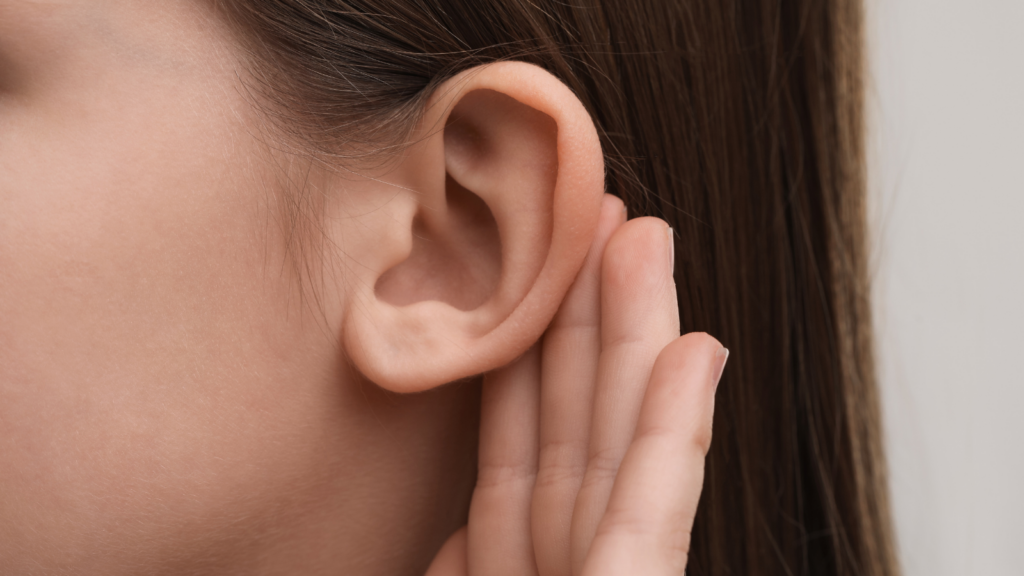
Yet one feature sits on either side of the face, visible in photographs, framed by hairstyles and often decorated with jewellery, without receiving nearly the same attention. This is the ears.
Mostly, we think of ears as functional rather than beautiful. They help us to hear.
However, their shape, size, position and proportions also contribute to the overall appearance of the face.
In fact, a 2023 review of earlobe rejuvenation published in the Dermatologic Surgery journal notes that the ear is one of the defining features of the face and influences perceptions of beauty.
The ears have also played a surprisingly important role in beauty and cultural identity throughout history. Their appearance has been altered, decorated and celebrated for thousands of years, although the ideals surrounding them have changed considerably.
The ancient Egyptians, for example, regarded jewellery as an indication of wealth and status. Ear piercings and elaborate ornaments were worn by members of the elite, while the discovery of the 5 000-year-old remains of Ötzi the Iceman revealed evidence of enlarged earlobe piercings.
A 2025 review of the history of body piercing, published in the medical literature, traces these practices across ancient societies, where piercings could communicate beauty, maturity, spirituality and social standing.
In some African cultures, including among the Maasai, stretched earlobes and decorative discs became significant markers of identity and beauty. Similar practices were found in ancient Mesoamerican societies, where large ear ornaments could indicate social status. The larger the stretched earlobe, the more prominent the ornament that could be displayed.
European attitudes towards ear adornment changed over time. Earrings were worn in different forms throughout the Middle Ages and Renaissance, while the Victorian era brought periods of moral disapproval towards body piercing.
By the 20th century, mass-produced jewellery helped make ear piercing more accessible, and the counterculture movements of the 1960s and 1970s embraced multiple piercings as expressions of individuality and rebellion.
Today, ear styling has become an important part of personal aesthetics. Multiple piercings, carefully curated jewellery and distinctive ear cuffs allow people to create their own look. But there is another side to this interest. This is the physical effects of years of adornment.
Heavy earrings can gradually stretch piercing holes, particularly when worn regularly over many years. The earlobes can also lose volume, develop creases and become thinner with age. Unlike the upper ear, which contains cartilage, the earlobe is made primarily of soft tissue. It is therefore vulnerable to changes in skin quality, volume and elasticity.
A 2025 systematic review published in Plastic and Reconstructive Surgery Global Open examined surgical techniques for correcting elongated earlobes in older patients. It highlighted how ageing can affect the shape and length of the earlobe, while jewellery and piercings can contribute to acquired deformities.
The problem is not necessarily dramatic. Sometimes it is simply that earrings no longer sit as they once did, piercing holes appear elongated, or the earlobes look thinner and more wrinkled than the rest of the face.
This is where modern aesthetic medicine comes in.
Earlobe rejuvenation is an emerging area of interest, with treatments ranging from hyaluronic acid dermal fillers to surgical repair. .
Hyaluronic acid filler can be used to restore lost volume and improve the appearance of thin, creased or deflated earlobes.
The aim is to restore a little fullness and support so that the area looks more balanced. Results are temporary, and suitability depends on the condition of the tissue and the extent of the damage.
For people with split or severely stretched earlobes, filler may not be appropriate. Surgical earlobe repair can close a split piercing or reshape the lobe, although it involves a different procedure and recovery process.
Prominent ears are another concern. Otoplasty, or ear surgery, can reshape or reposition the ears to improve their proportions and relationship with the head. Interestingly, the history of cosmetic ear surgery goes back much further than many people realise. In 1881, American surgeon Edward Talbot Ely published a description of an operation to correct prominent ears in a young boy. A historical review published by the International Society of Aesthetic Plastic Surgery identifies this as the first cosmetic operation reported in the medical literature.
The procedure has evolved considerably since then. Modern otoplasty techniques can address the cartilage that determines the ear’s shape, rather than simply removing skin behind the ear.
Among the UK clinics offering relevant expertise, 111 Harley Street has a specifically listed otoplasty procedure. Its treatment is designed to reshape, reposition or reconstruct the ears, addressing prominent ears, asymmetry and damaged or stretched earlobes.
The clinic’s team describe the procedure as a way to improve ear position and facial harmony, with results intended to look natural rather than draw attention to the ears.
There are limits to what non-surgical treatments can achieve. Filler may improve volume loss and creasing, but it cannot repair a completely split earlobe or correct prominent ears. Nor can it reverse every effect of ageing or years of heavy jewellery.
Perhaps the ears have never really been overlooked in beauty history. They have been pierced, stretched, decorated and admired across cultures for millennia. What is changing is the way we think about their appearance: not simply as a place to display jewellery, but as another part of the face that can change with time and deserves thoughtful, proportionate care.