

Skin cycling, also known as skincare cycling, has been called a ‘game-changer’ by its innovator, Dr Whitney Bowe. The New York-based dermatologist said she had literally seen people’s skin’s transform when they alternated skincare products according to a specified, professionally-advised schedule.
Practitioners of skin cycling structure their nighttime skincare routine over a multi-day rotation to optimise skin health and prevent irritation. The goal is to give the skin time to recover from potent products, while still reaping their benefits. This allows users to avoid the common pitfalls of over-exfoliation, dryness, or inflammation.
A Reddit user said of the concept: “Not everything that becomes ‘a fad’ is bad… Skin cycling works for me.”
Influencers, such as Hailey Bieber and dermatology TikTok creators, have praised the method for simplifying routines and making skincare more sustainable. Bieber mentioned in a 2023 Vogue interview that her routine involves ‘building in recovery days’ because her skin is ‘super sensitive’.
I must admit that I was a little sceptical when first reading about this. This is because so many things nowadays are called ‘game-changing’. Fake news proliferates and trends come and go. So I wanted to do my own research on skin cycling to find out exactly what it is and why it is beneficial. I also wanted to ascertain for myself whether it can be classified as a trend, or whether its popularity has scientific backing.
It definitely is popular at the moment, as a search through TikTok posts will reveal. On TikTok alone, the hashtag #skincycling has been viewed over 224 million times. I did the research… that’s about the population of Nigeria!
This large online following are sharing their personal skin cycling transformations with others, as well as tips for sensitive or acne-prone skin.
Dr Bower gives three reasons why she loves skin cycling on her website. Firstly, she says that it works, and calls it a ‘game-changer’ for your skin’s health. Secondly, she says the world of skincare has become overly complicated, and that skin cycling helps people to streamline their skincare routine in a way that is both effective and easy to follow.
Thirdly, she says it solves one of the most common mistakes people make when using skincare products, which is not building in nights for their skin barrier to recover.
Skin cycling as a beauty regimen first surged in popularity around 2021. However, its momentum continues today, especially across social platforms like TikTok and Instagram.
How Does Skincare Cycling Work?
Typically, a four-day cycle is followed. Night one is for exfoliation using ingredients like glycolic or salicylic acid. Night two for retinoids, such as tretinoin or retinol; and nights three and four are reserved for recovery, using nourishing products like ceramide-rich moisturisers, hyaluronic acid, or calming ingredients, like niacinamide.
After day four, the cycle repeats.
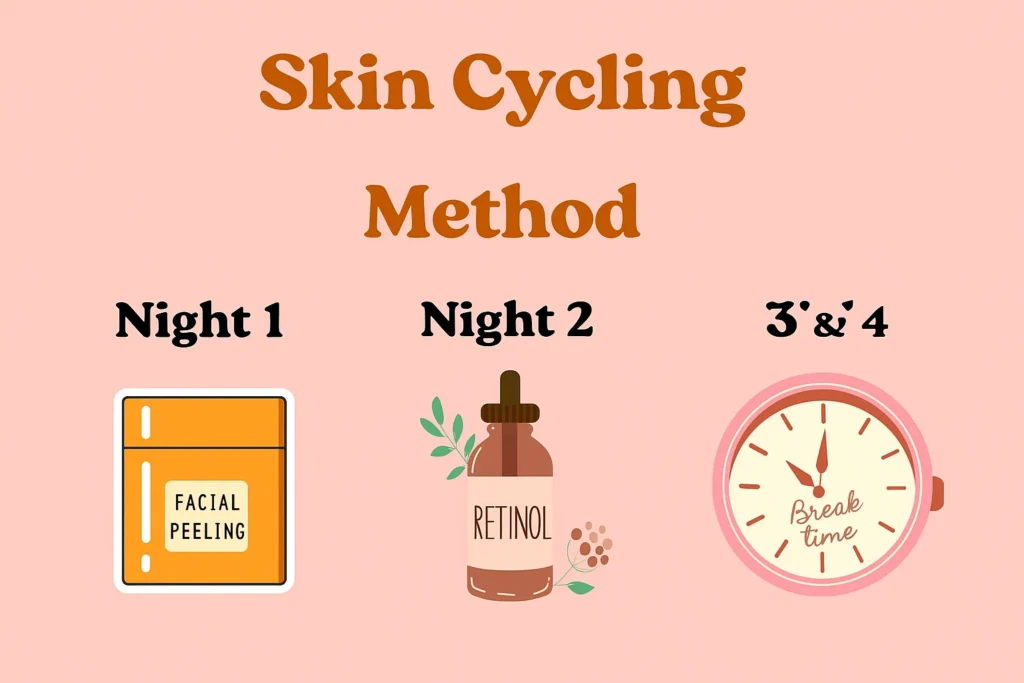
“The idea is to allow the skin to benefit from strong actives while also giving it the chance to rest,” says Dr Bower.
Dermatologists generally agree that skincare cycling can be especially effective for people with sensitive or reactive skin. Dr Hadley King, a board-certified dermatologist in New York, explains: “Many people apply too many active ingredients at once, which leads to barrier damage and irritation. Cycling helps restore balance while still delivering results.”
She adds that it’s also a great way to gradually introduce actives for those new to retinol or exfoliants.
Passing Fad Or Science-Based Solution?
The method isn’t necessarily revolutionary. Many dermatologists have advised against daily use of strong acids or retinoids for years. However, packaging it as a ‘cycle’ has made the approach more digestible and widely-adopted.
According to a 2023 survey by CeraVe, 68 percent of people report feeling overwhelmed by skincare and unsure how to layer products. Cycling offers a simplified structure. “When people know what to use each night, compliance improves, and so do results,” says King.
There are also variations of skincare cycling. Some people opt for a five- or six-day rotation. This is usually those with mature or acne-prone skin, who may want to include more active nights.
Others add a vitamin C serum in the morning to brighten and even out skin tone.
Over time, users report fewer breakouts, smoother texture, and a stronger skin barrier.
However, experts caution that skincare cycling isn’t one-size-fits-all. “If you have more resilient or oily skin, you might tolerate actives more frequently,” says Dr Mona Gohara, associate clinical professor of dermatology at Yale. She emphasises that results depend on product formulation, skin type, and consistency over time.
Finding a skin cycling routine that works for you starts with understanding your skin type and tolerance to active ingredients. If you have sensitive, dry, or reactive skin, begin with a basic four-night cycle. This will include one night of gentle exfoliation, one night of retinoid use, and two nights of recovery using hydrating and barrier-repairing products. This gives your skin time to adjust and reduces the risk of irritation.
Those with more resilient or acne-prone skin may eventually progress to shorter recovery periods or incorporate stronger actives like salicylic acid or prescription retinoids. It’s important to ‘patch test’ new products. To do this,introduce one active at a time, and observe how your skin responds over a few weeks, before adjusting frequency or potency.
Consulting a dermatologist or licensed skincare professional can help tailor your cycle to target specific concerns, such as pigmentation, acne, or ageing.
Keep your morning routine simple and protective, using SPF daily, especially when cycling potent ingredients at night.
Also, listen to your skin. Signs like redness, peeling, or increased sensitivity mean your cycle may need more recovery nights or gentler formulae.
The best routine is one which delivers visible improvement! The experts say that flexibility is the key, and as with all new beauty routines, it’s best to ask the experts.