

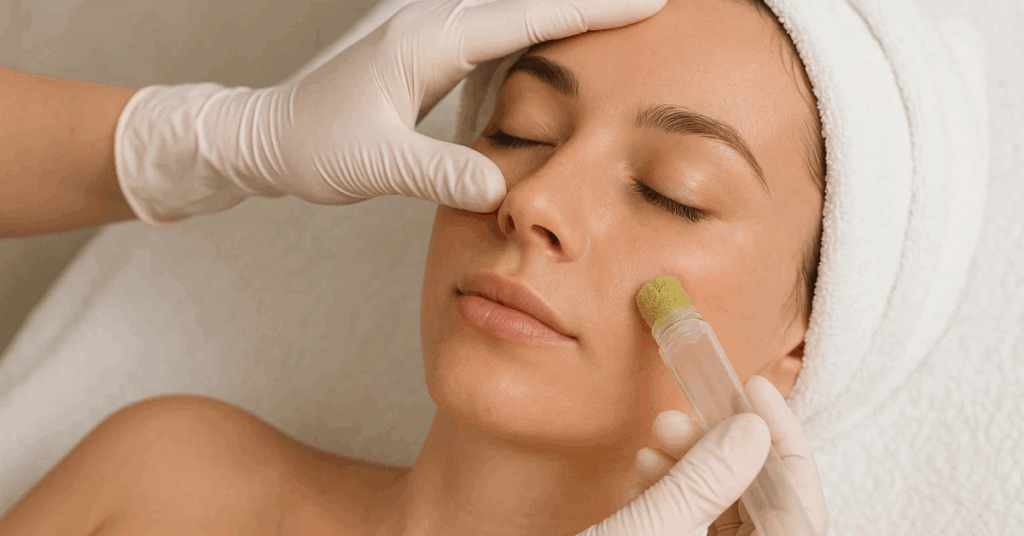
SQT microneedling is the new treatment on everyone’s lips. News of it has become viral. On closer inspection, it is easy to see why.
This microneedling technique is in fact needle-less. While this might seem a contradiction of terms, it uses something called spicules, rather than needles, to give results. This cuts back on the downtime after the treatment, but also means no blood during the treatment. The therapy promises improved skin texture, reduced acne scars, and anti-ageing benefits. And again, all this, without needles!
I know they say ‘no pain, no gain’, but if you can cut back on the pain, then why not?
Researchers have called the treatment ‘a groundbreaking alternative to traditional microneedling which delivers similar results without ever puncturing the skin with metal needles’.
I was sold at ‘without ever puncturing the skin with metal needles’. To be able to experience the benefits of microneedling without the needles, is like being able to eat a bowl of ice cream, without the added sugar.
In the commercial market, SQT facials are now being offered in high-end spas from Seoul to Sydney. Celebrities like Hailey Bieber and Zendaya are rumoured to have tried spicule facials, although their skincare teams remain tight-lipped.
The question then is how the ‘needling’ part of the treatment is performed, if no needles are used. The ‘SQT’ of SQT microneedling stands for ‘Spongilla Quartz Therapy’. The therapy uses microscopic siliceous spicules. These are natural needle-like structures harvested from freshwater sponges. They are invisible to the naked eye.
These needle-like structures, or spicules, are massaged into the skin. They feel slightly gritty on contact but are not sharp in the traditional sense. Once applied, they create micro-channels in the epidermis. These stimulate the skin’s natural repair mechanisms and boost collagen and elastin production.
Instead of using machines or traditional rollers with stainless steel needles, SQT involves the manual application of a sponge-based serum which contains thousands of these spicules. The skin reacts to them in a way which mimics microneedling but without breaking the skin barrier in the same invasive way.
The spicules usually dissolve within 24 to 48 hours of application and are expelled naturally by the skin. During this 24 to 48 hour period, they trigger cell turnover, refine pores, and enhance product absorption.
Users often report a tingling or ‘prickly’ sensation for the first day. This is followed by peeling or dryness as dead skin peels away.
“Clients love that it doesn’t break the skin, there’s no bleeding, and no downtime,” says Amanda Carlisle, from The Skin Loft in Los Angeles, adding, “Still, the results are comparable to a light microneedling session.”
The Science Behind The Glow
Spongilla spicules, a form of biogenic silica, have been used in Chinese medicine for centuries. Essentially, they are natural micro-needles.When these spicules enter the skin, they stimulate macrophages (immune cells), which then releases growth factors that support tissue regeneration. The process also increases micro-circulation and boosts nutrient absorption.
Interestingly, some studies suggest that spicule-based therapies can stimulate the epidermis three to five times more than traditional microneedling, particularly in activating the basal layer where new skin cells form.
A 2022 study published in the Journal of Cosmetic Dermatology found that spicule therapy significantly increased skin smoothness and reduced pigmentation in a controlled group after three sessions.
One of the most talked-about features of SQT microneedling is that it’s fully plant-based and biodegradable. The spicules come from eco-harvested freshwater sponges and dissolve naturally in the skin. These qualities make the treatment attractive to clean beauty advocates and eco-conscious consumers.
Researchers are also now studying how spongilla structures could be used to deliver active compounds deeper into the skin without needles. This research could profoundly impact many treatments, from acne to hormone-based therapies.
“SQT is ideal for people who want clinical results but are afraid of needles or downtime,” explains Dr Nadine Mayfield, a dermatologist who introduced the treatment to her London practice in 2024. “It’s like a workout for your skin, with no injections required.”
“It’s one of the only treatments where I saw visible improvement in my skin texture after just one appointment,” says wellness blogger Kayla Ramirez, who documented her experience with SQT on YouTube. “And I didn’t have to hide my face for a week afterward like I did with traditional microneedling.”
The treatment is currently trending on TikTok and other social media channels, with users saying it creates the trending ‘glass skin’ finish, in a gentler way than most other treatments. It has also been called the ‘lunch-time’ facial because it needs no downtime. The spicules might stay in your body overnight but sleeping with natural needles in your skin overnight might seem more desirable to some than needles which draw blood.
While the treatment is generally considered safe, it’s still essential to go to trained professionals. Spicules can be irritating if overused or misapplied. Some users with extremely sensitive skin may experience inflammation or prolonged redness.