

Aesthetic treatments are praised for their efficacy, safety, and minimal pain and downtime. However, be that as it may, some procedures and devices can cause pigmentation issues in darker skin tones.
And according to the 2021 Census, approximately 18% of the population in England and Wales identify as belonging to an ethnic minority group, including individuals of Asian, Black, Mixed, and other ethnic backgrounds. Specifically, 9.6% (around 5.4 million) are Asian or Asian British, 4.2% (2.4 million) are Black or Black British, 3.0% (1.7 million) belong to Mixed or Multiple ethnic groups, and 2.2% (1.2 million) identify as other ethnic groups.
That is why choosing the right procedures and devices when residing in the UK to the USA is crucial to avoid complications like hyperpigmentation or scarring. Simply because, ethnic or darker skin tones have unique qualities. Some of these beautiful qualities include increased melanin, which, of course, provides natural UV protection but also presents specific challenges for aesthetic treatments.
Therefore, treatments to generally avoid include Intense Pulsed Light (IPL) and BroadBand Light (BBL) therapies, deep ablative lasers, and deep chemical peels, as these carry a higher risk of pigmentation issues, burns, and scarring. So, it goes without saying, knowing which treatments are safe and effective is essential when planning any aesthetic procedure.
After all, as the famous saying goes: knowledge is power.
Understanding The Fitzpatrick Scale
The Fitzpatrick scale is a system used in dermatology to classify human skin into different types based on skin colour and reaction to sun exposure (UV light). It was developed in 1975 by Dr Thomas Fitzpatrick to help estimate the risk of sunburn, skin damage, and skin cancer, as well as to guide treatment decisions.
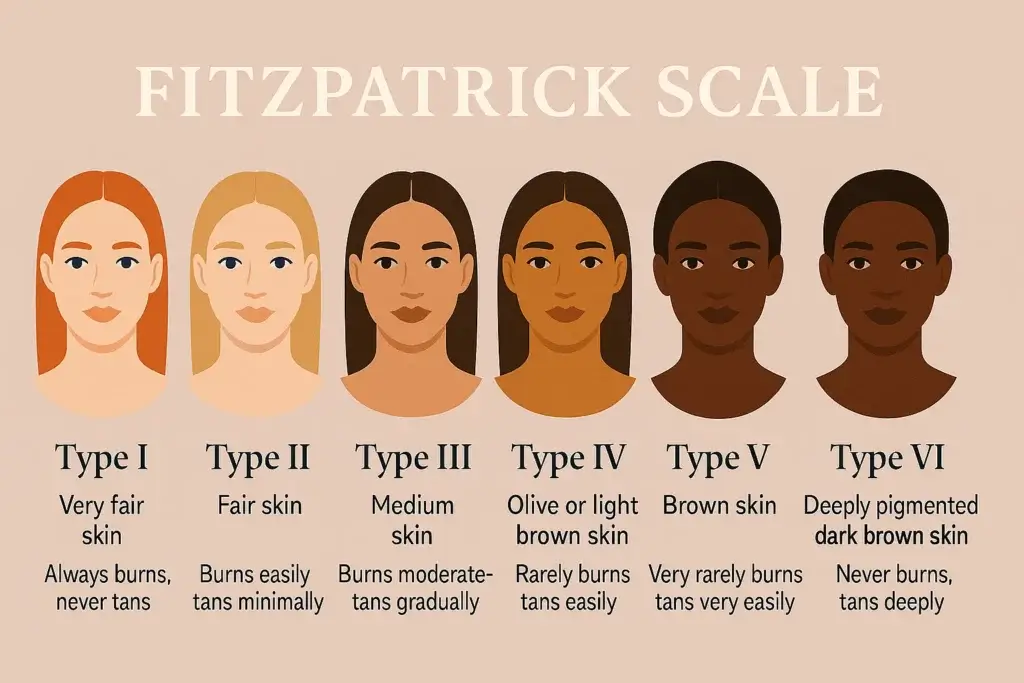
The Six Fitzpatrick Skin Types:
- Type I – Very fair skin, often with red or blonde hair, light eyes.
- Example: People of Northern European descent.
- Type II – Fair skin, often with blue/green eyes, light hair.
- Example: People of Northern European descent.
- Type III – Medium or light brown skin.
- Example: People of Mediterranean or some Asian descent.
- Type IV – Olive or moderate brown skin.
- Example: People of Middle Eastern, Hispanic, or South Asian descent.
- Type V – Dark brown skin.
- Example: People of African, Middle Eastern, or Indian descent.
- Type VI – Deeply pigmented dark brown to black skin.
- Example: People of African descent.
1. Laser Treatments
Laser technology has advanced significantly since the 1980s. Because, by the 2000s, fractional lasers were introduced for anti-ageing treatments, and have been all the rage ever since.
Today, these advanced technologies are considered suitable for a wider range of skin tones. This is because they are designed to either penetrate deep into the skin without affecting the epidermis (such as the Nd:YAG laser), target water in the skin rather than melanin (such as the MOXI laser), or use different wavelengths to rejuvenate the skin safely, and to reduce the risk of pigmentation issues.
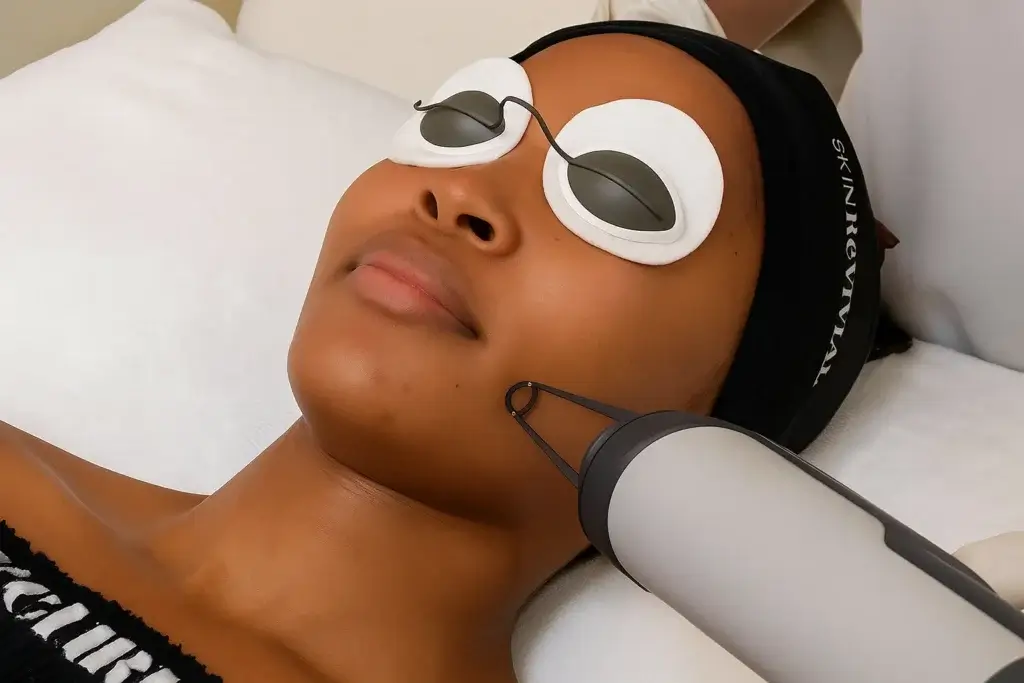
Here are the stats: one study examined women with medium to dark skin tones (Fitzpatrick types IV–V) who had underarm hyperpigmentation. They were treated with a gentle setting of the Q-switched 1064 nm Nd:YAG laser, and the results were very positive. Pigmentation was reduced in 85 to 100% of the treated areas. Plus, approximately 22 to 33% of the women experienced “excellent” improvement, while another 55% saw noticeable improvement. Most importantly, no side effects were reported.
However, it remains essential to select the right type of laser to minimise the risk of hyperpigmentation. This is why consulting with a highly qualified professional before booking any treatment is always crucial.
2. Microneedling
Microneedling involves creating tiny punctures in the skin to stimulate collagen production. It is a safe option for darker skin tones when performed correctly. Traditional Microneedling is effective for treating acne scars and improving skin texture. Whereas, Radiofrequency Microneedling combines microneedling with radiofrequency energy to enhance skin tightening and tone. It is particularly beneficial for addressing hyperpigmentation and scarring in darker skin
And we need to emphasise that microneedling in dark or pigmented skin often results in high levels of patient satisfaction. Across multiple studies, around 75–80% or more of participants report being pleased with their improvement. For example, in a study on microneedling for acne scars with associated pigmentation in patients with darker skin tones (Al Qarqaz et al., 2018), 39 patients with Fitzpatrick skin types III–V were treated. Of these, 79% (31 out of 39) reported satisfaction with their results. Similarly, another study on the efficacy and outcomes of microneedling (Dermaroller) for post-acne scars in patients with skin types IV and V found that all participants reported satisfaction. Within this group, 55.6% achieved a “good response” (41–50% improvement), while others reported even greater improvement.
3. Chemical Peels
Chemical peels can effectively address concerns such as hyperpigmentation and uneven skin tone. For darker skin tones, it is especially important to select the right type and strength of peel, as deeper peels are not always the most suitable option.
Superficial peels, such as those using glycolic acid or lactic acid, are generally considered safe and effective for darker skin, offering exfoliation with minimal risk of post-inflammatory hyperpigmentation.
Alternatively, a VI Peel, which is a medium-depth peel designed for all skin tones, can help improve skin texture, tone, and clarity.
However, it is important to emphasise that only a consultation with a qualified professional can determine whether this, or any other type of chemical peel, is appropriate for your skin type, tone, and condition.
4. LED Light Therapy
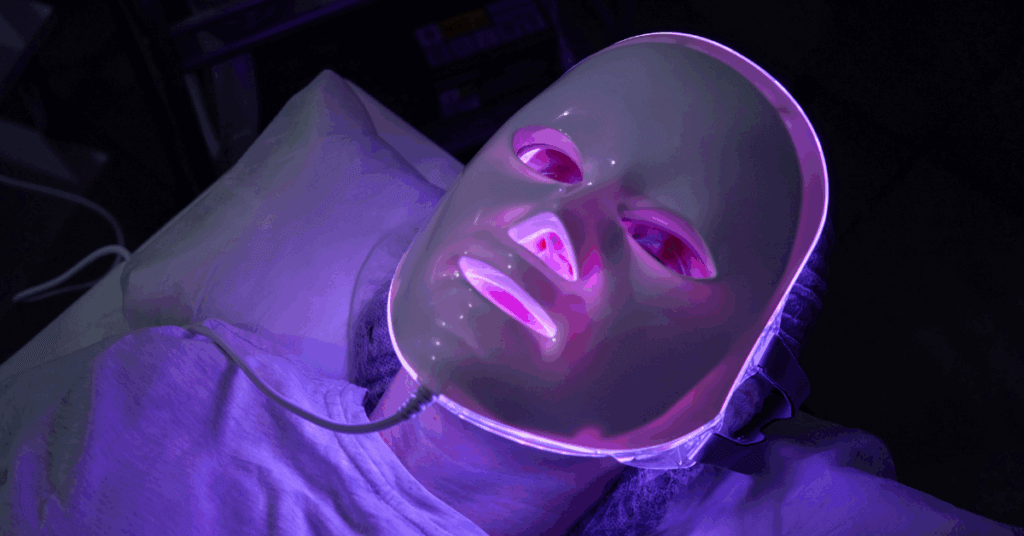
LED light therapy is generally considered safe for individuals with darker skin tones, offering benefits such as improved skin texture, reduced inflammation, and enhanced collagen production. Unlike treatments that rely on heat or UV radiation, LED therapy does not typically trigger melanin production, thereby minimising the risk of hyperpigmentation.
A systematic review of 31 randomized controlled trials found that LED treatments were safe and well-tolerated by patients, with adverse events being mild and including pigment changes, dryness, erythema, desquamation, and stinging.
However, it is important to note that blue light therapy, which is often used for acne treatment, may induce hyperpigmentation or darkening of the skin in individuals with darker skin tones.
To ensure safety and effectiveness, it’s recommended to use LED light therapy devices as directed, consult with a dermatologist before starting treatment, and monitor the skin’s response during the therapy.
5. Injectable Treatments
Injectables like Botox and dermal fillers are popular for addressing signs of aging and enhancing facial features, no matter your skin tone. Botox is used to relax facial muscles, reducing the appearance of wrinkles and fine lines, and is safe for darker skin tones when administered by a qualified professional. Dermal fillers (e.g., Juvederm) add volume to areas like the cheeks and lips, restoring youthful contours. These fillers are also suitable for darker skin tones, providing natural-looking results.
To Recap
Getting the best results for darker skin tones means choosing treatments and devices that are both safe and effective.
| Treatment Category | Recommended For Ethnic Skin | Benefits For Darker Skin | What To Avoid |
| Advanced Laser Treatments | Yes | Designed to reduce the risk of pigmentation issues. | Deep Ablative Lasers |
| Microneedling | Yes | Stimulates collagen and is effective for treating hyperpigmentation and scarring. | Must be performed correctly by a qualified professional. |
| Superficial/Medium Chemical Peels | Yes | Offers exfoliation with minimal risk of post-inflammatory hyperpigmentation. | Important to select the correct type/strength. |
| LED Light Therapy | Generally Safe | Minimises the risk of hyperpigmentation by not triggering melanin production. | Blue light therapy may induce hyperpigmentation or darkening in some with darker skin tones. |
| Injectable Treatments | Yes | Safely addresses signs of ageing. | Must be administered by a qualified professional for safety and natural results. |
That is why it is always of the utmost importance to always consult with an experienced dermatologist, licensed medical professional, or qualified skincare specialist, who can create a plan that targets your specific skin concerns while reducing risks.
By using the right treatments, people with darker skin tones can improve their skin’s appearance safely.