


“It’s a very exciting time for laser aesthetics.” This, according to Dr Sarah Tonks, a London-based aesthetic doctor at The Lovely Clinic, in an interview with Get The Gloss. He’s speaking about picosecond laser technology.This technology is revolutionising the world of skincare and non-invasive aesthetics in the UK and beyond.
The treatment is known for its ultra-fast pulses and precision and is used to treat pigmentation, acne scars, fine lines, and even unwanted tattoos. It delivers noticeable results with minimal downtime.
“The precision and minimal recovery time of picosecond technology means we can offer advanced treatments to more people, regardless of their skin tone or schedule,” says Dr Tonks.
The picosecond laser was originally developed for tattoo removal. It gained FDA approval in the United States in 2012 and later arrived in the UK around 2015. Leading systems like PicoSure (from Cynosure) and PicoWay (from Candela) were the first to enter the market. These quickly gained traction in aesthetic medicine for their efficacy and reduced downtime.
Dr Tonks explains: “When I first saw the results from picosecond lasers in Asia, I knew it would be transformative here too. It’s fast, virtually painless, and the brightening effects are remarkable.”
According to UK-based Cosmetics Skin Clinics, “Picosecond lasers offer results after just one or two sessions for some types of pigmentation, compared to traditional lasers which may require five or more.”
Its brilliance is credited to its ability to work in trillionths of a second, shattering pigment and stimulating collagen without causing heat damage to surrounding tissue.
It’s quickly becoming a top choice in UK aesthetic clinics for patients seeking safe, effective skin rejuvenation with faster recovery and long-lasting results.
How Does It Work?
The laser energy is delivered in ultra-short pulses which shatter unwanted pigmentation (such as melasma, sun spots, and post-acne marks) into tiny particles. These particles are then cleared naturally by the body’s lymphatic system.
It stands out for its dual action. While targeting pigment, the laser also triggers a process called laser-induced optical breakdown (LIOB). This stimulates collagen and elastin regeneration and leads to smoother, firmer skin.
A range of cosmetic concerns are accommodated for. These include:
1 Melasma And Hyperpigmentation
A condition notoriously hard to treat, especially on darker skin tones.
2 Sun Damage
Freckles and sunspots respond well to picosecond energy.
3 Acne Scars
By stimulating collagen and breaking down scar tissue, it helps smooth the skin’s surface.
4 Skin Rejuvenation
It improves overall tone and texture, giving a brighter and more youthful look.
5 Tattoo Removal
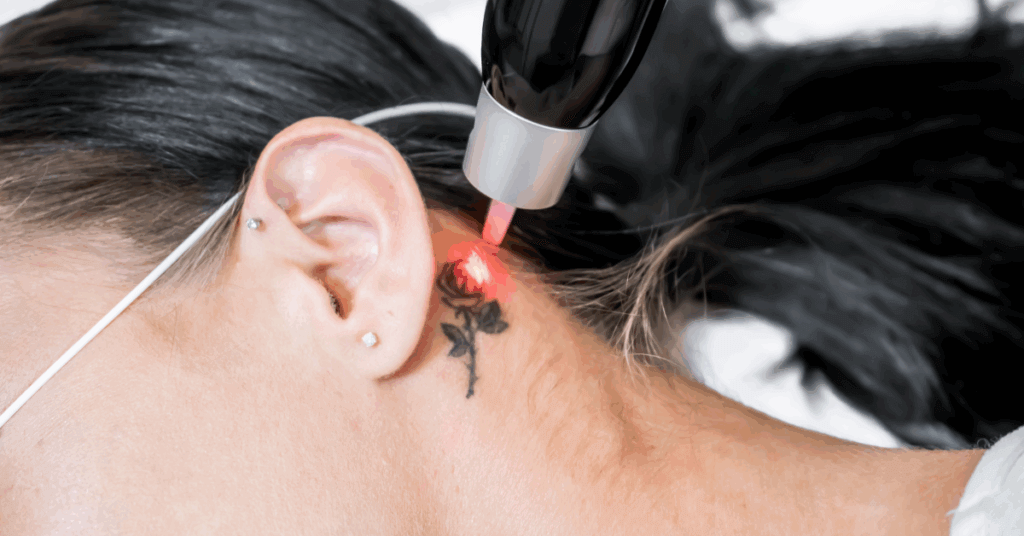
Still one of its main uses, especially for multi-coloured tattoos or stubborn ink.
Dr David Jack, an aesthetic doctor on Harley Street, explains in Elle UK: “It’s become a lunchtime procedure for a lot of my clients. The speed and results make it ideal for the busy professional who doesn’t want to hide away for days post-treatment.”
With new models offering multi-wavelength options and fractional handpieces, the next generation of picosecond lasers are expected to be even more versatile. Clinics are also now combining laser toning with other modalities, such as microneedling or chemical peels. This is to ensure the treatment has even greater impact.
The revolutionary treatment represents the perfect fusion of science and aesthetics. It promises clearer, brighter skin without the hassle.
A Treatment Worth Noting
We were enamoured by some of the interesting tidbits of information which came up when researching the treatment. Here are just some of the interesting facts about picosecond laser technology:
Asian Influence
The popularity of picosecond lasers in Korea and Japan helped to propel the treatment’s global growth. In these countries, porcelain skin is a beauty ideal. Clinics in Seoul were among the first to use laser toning for melasma and anti-ageing, long before it became a trend in the UK.
Suitable For All Skin Colours
Older lasers carried a risk of post-inflammatory hyperpigmentation (PIH) in darker skin tones. Picosecond lasers, especially those with 1064nm wavelengths, are safer and better tolerated on Fitzpatrick skin types IV to VI.
Minimal Downtime
The biggest appeal of picosecond toning lies in its ‘no-downtime’ promise. Unlike fractional CO2 lasers, which may require up to a week of healing, picosecond lasers allow users to return to normal life immediately, often with an immediate glow.
Increasingly Used By Men
UK male clients are increasingly booking laser toning sessions to deal with sun damage and acne scarring. According to Harper’s Bazaar UK, clinics have reported a 40 percent increase in male appointments for laser-based treatments since 2023.
Celebrity Endorsement
Though not always named, picosecond lasers have been quietly endorsed by celebrities seeking discreet skin perfection. Meghan Markle’s ‘glass skin’ glow has sparked speculation, with many Harley Street practitioners suggesting subtle treatments like PicoSure are behind her radiance.
The Takeaway
Picosecond laser technology has firmly established itself as one of the most exciting advancements in modern aesthetics, offering precision, safety, and impressive results across a wide range of skin concerns. From tackling stubborn pigmentation to rejuvenating the complexion with minimal downtime, it represents a shift toward treatments that fit seamlessly into busy lives. With continued innovation, broader accessibility, and growing demand from both women and men, the future of skin health looks brighter, quite literally, thanks to the power of picosecond lasers.