

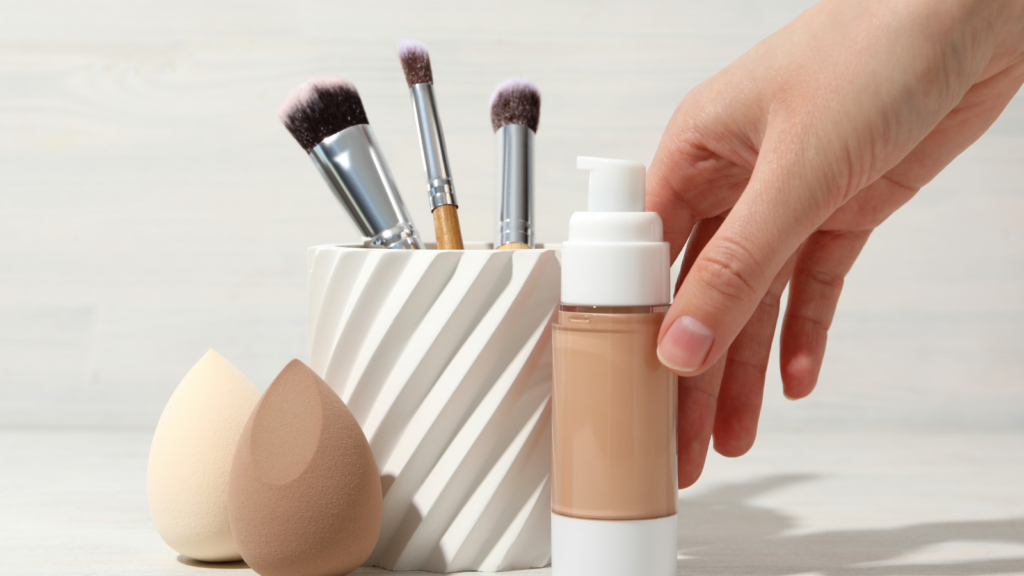
Beauty hacks are nothing new. Each year has something new and innovative which surfaces. Many are based on truth and have an impact. Others are just hype.
I remember how in the 1990s, household staples like chilled tea bags were used to reduce under-eye puffiness; and how in the 2000s, spoons were used to create the perfect eyeliner arch. Around this time, white eyeliner was applied beneath eyeshadow to make colours appear brighter.
Now, millions are soaking or misting their foundation before applying it for a more natural finish. I noticed this when scrolling through social media posts. I’ve never personally tried this before, but this new hack definitely left its impression on me.
Those using their foundation in this way swear by the method, however, experts are divided over whether the hack enhances make- up or compromises the formula.
Before I take a closer look at the debate, let me explain exactly what the foundation-in-water hack is.
In countless viral videos, beauty creators either dip a pump of liquid foundation into a bowl of water or mist it with a facial spray before applying it to the skin. According to them, they do this to create a lighter, more natural-looking complexion which resembles real skin rather than a full-coverage mask.
The videos often show dramatic before-and-after transformations. Foundation appears to melt seamlessly into the skin, leaving behind a fresh, dewy finish which aligns perfectly with the ‘your skin but better’ aesthetic dominating social media.
Why The Hack Has Gone Viral
Beauty trends often reflect changing ideals, and today’s consumers are moving away from heavy, sculpted makeup towards softer, healthier-looking skin. Rather than covering every imperfection, many people now want make-up which enhances natural texture while allowing freckles, pores and subtle redness to remain visible.
The foundation-in-water hack appears to support this goal by making foundation seem thinner and easier to blend.
Videos typically claim the method creates a skin-like finish, prevents cakiness, makes foundation appear more lightweight, gives a natural glow, and helps products spread more evenly
It also feels refreshingly simple in that no expensive product is required… just water.
However, as I have learned from previous beauty hacks, simplicity doesn’t always mean science.
Experts are questioning whether water can really thin foundation. They say that the answer is more complicated than many videos suggest. Most modern liquid foundations are carefully formulated emulsions, meaning they contain precise ratios of water, oils, pigments, silicones, polymers and preservatives.
These ingredients are balanced to achieve specific properties, including coverage, wear time, adhesion to skin, colour consistency, finish and stability. Adding extra water changes that balance.
Some formulas may temporarily appear smoother because the pigments become more dispersed during application. Others may separate, lose coverage or become patchy. Unlike mixing foundation with a compatible moisturiser or serum designed to work alongside cosmetics, plain water doesn’t integrate into every formula equally.
The result often depends on the specific foundation being used.
Why some people think it works
In all fairness, there are those who religiously practice their technique and so there must be a reason for their enthusiasm. Make-up artists suggest several factors which could explain the effect:
Damp Application Tools
Many creators apply the diluted foundation using a damp sponge. Professional make-up artists have recommended damp beauty sponges for years because they naturally absorb excess product and press foundation more evenly into the skin.
The smoother finish may therefore come from the sponge and not the added water.
Less product
Water encourages foundation to spread over a larger area. People may unknowingly use less foundation overall, creating the illusion of a thinner formula. In reality, they are simply applying a lighter layer.
Better Skin Preparation
Many viral demonstrations begin with well-moisturised, freshly exfoliated skin. Good skincare often contributes more to flawless make-up than the foundation itself. Hydrated skin naturally reflects light more evenly, making almost any foundation appear smoother.
Other Ways To Achieve The Same Effect
The popularity of this hack highlights that people want make-up that looks more believable. If you want this effect with your foundation, there are some tried and tested methods to make this happen, recommended by professional make-up artists:
- Applying foundation over well-hydrated skin.
- Mixing foundation with a compatible moisturiser or complexion booster rather than water.
- Using a damp beauty sponge for seamless blending.
- Applying foundation in thin layers instead of one thick coat.
- Finishing with a hydrating facial mist after application to soften the appearance of make-up.
These techniques preserve the integrity of the formula while still creating the effortless complexion many consumers are seeking.
Why Beauty Hacks Spread So Quickly
The foundation-in-water trend illustrates a broader shift in online beauty culture. Today’s most successful beauty content doesn’t necessarily showcase expensive products. Instead, it offers shortcuts, ‘secret’ techniques and dramatic transformations which feel accessible to everyone.
Social media algorithms reward novelty, and simple hacks are easy to replicate, film and share.
However, it’s important to note that many trends are based on personal experience rather than controlled testing. Results can vary dramatically depending on skin type, climate and the products used.
Our verdict? The foundation-in-water hack isn’t necessarily harmful, but it possibly isn’t a universal beauty breakthrough either. For some users, especially those with lightweight, water-based foundations, the technique may produce a softer finish simply because less product is being applied.
For others, particularly those using long-wear, matte or SPF foundations, adding water could reduce performance and create uneven results.
Ultimately, the trend serves as a reminder that great make-up often depends less on shortcuts and more on thoughtful application.