

A few years ago, if you had told me, you were having a facial which used salmon sperm, I might have raised an eyebrow; even two. Today, most beauty enthusiasts don’t just know what PDRN treatments refer to, but also that PDRN stands for polydeoxyribonucleotide and that it is derived from purified DNA fragments obtained from salmon.
For a long time, this beauty treatment was aesthetics ‘best-kept secret’, however, with this secret being out of the bag, so to speak; I read this morning of a new treatment which is stealing centre stage.
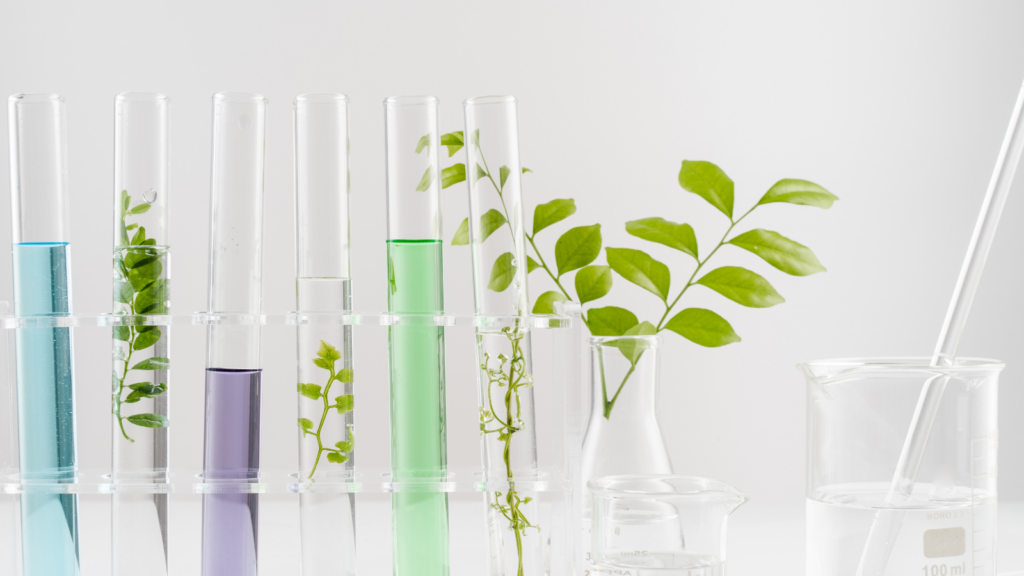
The new innovation is called plant-derived PDRN. Plant-derived PDRN is a biotechnology-derived form of regenerative DNA fragments created from botanical sources or bioengineered processes. It is designed to mimic the skin-repair and collagen-stimulating benefits of traditional salmon-derived PDRN, without using animal-derived ingredients.
It ranks high on sustainability and can also be combined with peptides, collagen stimulators and other bioactive ingredients.
What Is Plant-Derived PDRN?
I remember when everyone’s focus started turning towards ‘green’. Food and beauty products would get a little environmentally-friendly ‘green’ sticker or logo on them so that you knew as consumers that whoever had produced them had done so with the environment in mind. Phrases like, ‘Greening the community’ were used in the press. Green initiatives were launched.
Then, plant-based meals became a thing. These suddnely emerged as part of an environmentally-friendly, health-boosting alternative lifestyle and many ardent followers of ‘plant-based’ eating still check menus for plant-nbased menu options.
So the mention of plant-derived PDRN immediately caught my attention. It sounds futuristic, environmentally friendly and trendy, all at the same time. However, the big question is, what is it and does it work?
Conventional PDRN is typically extracted from the DNA of salmon species, where it is purified into short DNA fragments believed to support tissue repair, reduce inflammation and stimulate fibroblasts involved in collagen production.
While this form has been widely used in regenerative medicine and aesthetics, researchers have been exploring plant-based alternatives. In steps plant-derived polydeoxyribonucleotide (PDRN). It is designed to deliver many of the skin-repair benefits associated with traditional PDRN while avoiding the use of animal-derived ingredients.
Rather than relying on salmon DNA, plant-derived PDRN is produced using advanced biotechnology to create DNA-based molecules from botanical sources or through bioengineered processes which mimic the biological activity of traditional PDRN.
Says an article in Personal Care Magazine: “Green PDRN introduces a plant-derived alternative, delivering DNA-based skin benefits through a vegan, traceable and formulation-ready solution aligned with next-generation biotech skincare innovation… Among the available sources, rice-derived PDRN provides a relevant option as demand grows for plant-based and recognisable ingredients. Rice bran is particularly relevant for formulations targeting brightening applications.” The article continues: “Reishi-derived PDRN similarly shows DNA protection activity equivalent to its salmon-derived counterpart.”
Pairing For Greater Impact
As mentioned, what is exciting about plant-derived PDRN is how it is being paired with various bioactive components for greater impact. Let’s look at each in turn:
Bioactive Peptides
Peptides have become some of the most researched ingredients in modern skincare because they function as signalling molecules that communicate with skin cells. Certain peptides encourage fibroblasts to produce more collagen and elastin, while others help reduce inflammation or strengthen the skin barrier.
When combined with DNA repair technologies, peptides may work synergistically to support healthier skin.
Collagen-Stimulating Ingredients
Increasingly, consumers are looking for treatments which improve overall skin health rather than simply masking visible signs of ageing. Many formulations also include collagen-stimulating ingredients which further enhance skin firmness. Rather than simply adding collagen to a cream, which is generally unable to penetrate deeply into the skin, these formulations aim to encourage the skin to manufacture its own collagen over time.
Still, researchers now recognise that collagen loss represents only one aspect of the ageing process. Chronic low-grade inflammation, oxidative stress, declining cellular communication and reduced regenerative capacity all contribute to visible skin ageing.
Modern skincare is increasingly targeting these biological processes simultaneously. Rather than focusing on a single anti-ageing ingredient, next-generation formulations combine DNA repair technology, with peptides, antioxidants, growth factor-inspired ingredients, ceramides and collagen stimulators to address multiple mechanisms involved in skin ageing.
Plant-derived PDRN technologies fit naturally within this broader regenerative strategy.
Why Is This A ‘Best-Kept Secret’?
The move towards biotechnology-derived ingredients also reflects wider changes taking place throughout the cosmetic industry.
Consumers are becoming more interested in scientifically validated ingredients supported by laboratory research, rather than marketing claims alone. Biotechnology allows manufacturers to produce highly purified, standardised ingredients with consistent quality, an important consideration for both safety and clinical performance.
At the same time, sustainability has become an increasingly important purchasing factor. Biotechnology offers opportunities to reduce environmental impact while maintaining high-quality ingredient production.
Plant-derived PDRN may prove to be one of the next major chapters in aesthetic biotechnology, offering a glimpse of a future in which daily skincare routines are designed not only to protect the skin, but to actively support its capacity to repair, regenerate and maintain youthful function over time.