

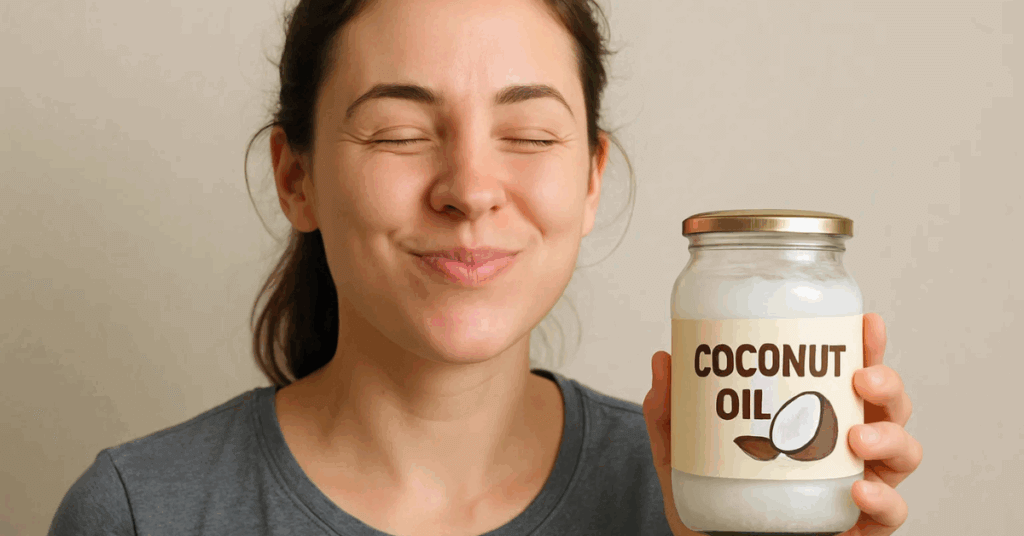
The age-old practice of oil pulling is having a modern-day renaissance. This ancient Ayurvedic practice involves swishing oil around the mouth for 10 to 20 minutes. Typically, coconut, sesame, or sunflower oil is used.
While its traditional use is to improve oral health and detoxification, recent advocates claim it can also help whiten teeth.
Social media influencers are writing about its benefits. On TikTok @sandykingx writes: “I’m gonna oil pull before I go to the dentist, because we wanna have that extra security.”
She explains that before going to the dentist, she uses oil pulling with coconut oil and peppermint oil for added oral freshness and ‘extra security.’ She recommends swishing it around for 10 to 15 minutes to help with whitening and detoxification.
Posts such as hers are intriguing, as the idea of using certain oils for ‘oral freshness’ seems quite foreign at first.
As foreign as it sounds, oil pulling is actually nothing new. It dates back over 3 000 years. TikTok influencers, wellness bloggers, and holistic dentists have revived this ancient practice as a natural approach to oral care.
“Coconut oil is rich in lauric acid, which has known antimicrobial properties,” explains Dr. Anita Sethi, a holistic dentist and member of the British Society for Integrative Oral Health. “The idea is that oil pulling reduces the harmful bacteria in the mouth, some of which can contribute to plaque build-up and tooth discolouration.”
Clinical studies on oil pulling are limited but growing. A 2017 review published in the Journal of Traditional and Complementary Medicine found that oil pulling significantly reduced oral bacteria, specifically Streptococcus mutans. This is a key contributor to plaque and tooth decay.
Another study in the Nigerian Medical Journal (2015) showed that participants who practiced oil pulling with coconut oil daily for two weeks saw a reduction in plaque and gingivitis.
“There’s anecdotal evidence and emerging small-scale research suggesting that oil pulling can help remove surface stains over time,” says Dr Emma O’Neill, a London-based aesthetic dentist. “But it’s not a miracle solution. It won’t change the intrinsic colour of your teeth like professional whitening treatments would.”
Oil pulling offers a gentler alternative for those wary of hydrogen peroxide-based whitening gels, which can cause sensitivity and enamel thinning. According to Dr Sarah Stinson of The Natural Smile Dental Practice in Bristol, “We have patients who’ve seen improvements in overall mouth cleanliness and a slightly brighter smile after consistent oil pulling. It’s safe when done properly, but it’s a supportive habit, not a replacement for brushing or professional care.”
London-based wellness coach Ella Mason began oil pulling during the pandemic and continues the ritual daily. “Within a month, I noticed my teeth looked less yellow and my breath was fresher in the mornings. It’s not dramatic like veneers or bleaching, but it’s definitely real.”
The technique is simple. It involves taking a tablespoon of cold-pressed coconut oil (or another edible oil) and swishing it gently around your mouth for 10 to 20 minutes, while avoiding swallowing. Afterwards, the oil is spat into a bin (not the sink, as it can clog pipes). The mouth is then rinsed with warm water, and teeth are then brushed as normal.
“It’s important not to be aggressive with the swishing,” warns Dr O’Neill. “Vigorous movement can lead to jaw fatigue or discomfort, especially if you’re doing it daily.”
While the National Health Service doesn’t officially endorse oil pulling, it also doesn’t warn against it. This is so long as it complements, rather than replaces, regular oral hygiene. According to the British Dental Association, “There is no solid scientific evidence that oil pulling is a reliable substitute for brushing and flossing. However, using it as an additional practice is unlikely to cause harm.”
The subtle whitening effect of oil pulling is largely due to reduced plaque and stain removal. It might be enough for those seeking a healthier, more radiant smile without the synthetic shortcuts.
As Dr Sethi puts it this way: “Think of oil pulling as a tool in your wellness toolkit. It’s not magic, but it can absolutely support whiter, cleaner teeth over time.”
Teeth whitening has a long and often surprising history. In Ancient Egypt, white teeth were a status symbol. The elite used a paste of ground pumice stone and wine vinegar to clean and lighten their smiles.
The Romans reportedly used urine, which is rich in ammonia, as a natural bleaching agent.
During the Renaissance, women would scrub their teeth with acidic solutions like lemon juice, which unfortunately eroded enamel over time.
In 17th-century Europe, barbers often acted as early dentists and used metal files and nitric acid to ‘whiten’ teeth, usually causing long-term damage.
It wasn’t until the 1980s that hydrogen peroxide-based treatments became mainstream. These treatments offered a safer and more effective whitening option. Today, natural alternatives like oil pulling and activated charcoal coexist with high-tech solutions, such as laser whitening and LED-enhanced trays.