

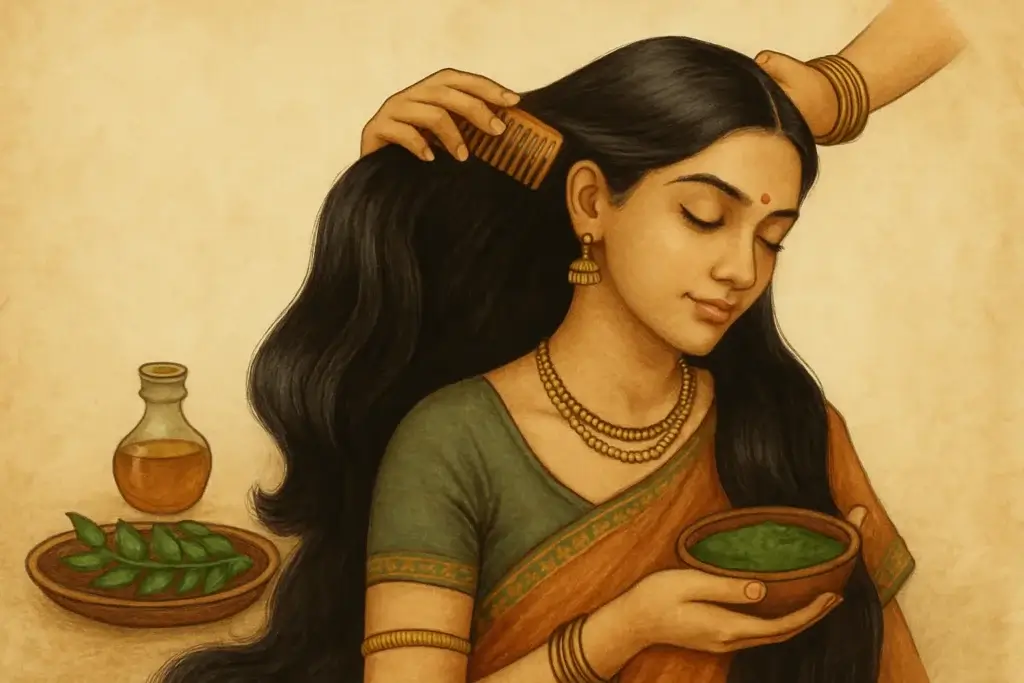
For centuries, Indian women have been admired for their thick, lustrous hair. Having naturally fine hair, I have always admired friends with this kind of ethereal Rapunzel-like hair. Their hair is feminine and hangs beautifully, and is really their ‘crowning glory’, as the expression goes.
Considering this, I was interested to read about the many time-honoured haircare rituals that have been passed down the generations in Indian culture. While genetics play a huge role in the beautiful hair Indian women have, they are also committed to caring for their hair. For those of us who want to add some gloss and pizzazz to our hair, it’s worth knowing these haircare secrets which have stood the test of time.
“Indian haircare has always been rooted in natural science, “says hair expert Jawed Habib. “Our grandmothers didn’t have salons, but they had coconut oil, henna, shikakai, and a deep understanding of how to keep hair healthy without chemicals. That wisdom is priceless, and still very relevant today.”
At the same time, global figures like Priyanka Chopra have openly shared their reliance on coconut oil massages and DIY yogurt hair masks. “Hair oiling has been a part of my upbringing and Indian culture for centuries. My mother passed it down to me, and the benefits have been proven from centuries of ancient tradition,” says Priyanka on one of her favourite Indian haircare techniques.
With natural and sustainable beauty solutions now trending, these ancient Indian hair secrets are gaining renewed attention. This is for good reason … a woman’s hair has been called her crowning glory and if there is some way to give our mane just that much more gloss and pizzazz, we’re all for it.
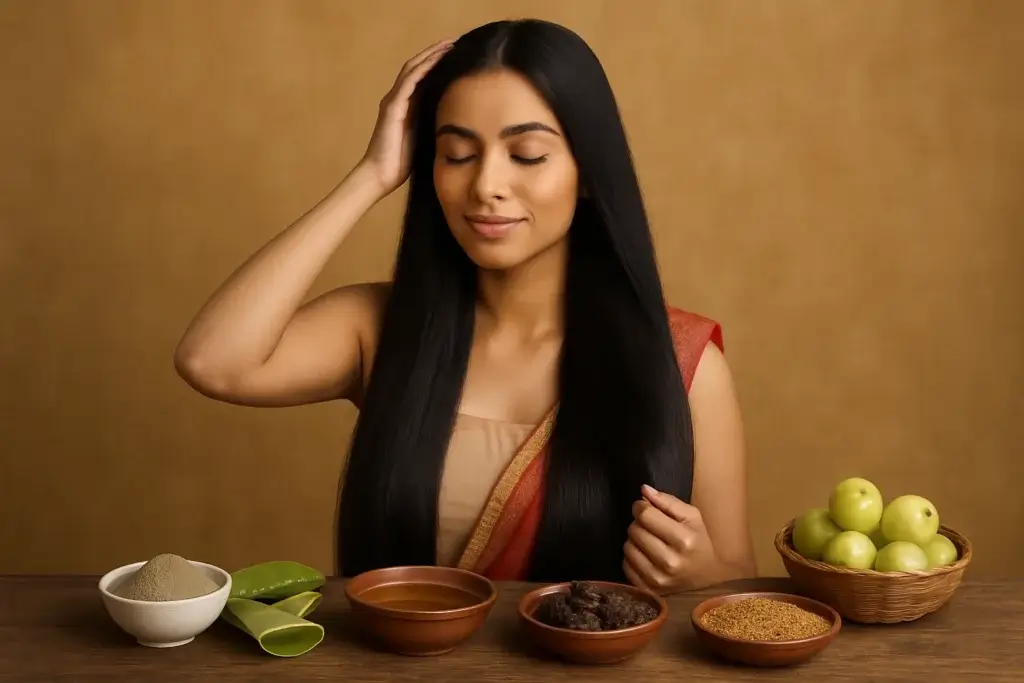
Here are just a few of the Indian hair ‘secrets’ which have been passed down the generations:
1. Oiling The Hair
One of the most important rituals in Indian hair care is champi. This is a traditional head massage using warm oil. Oiling the scalp is both cosmetic and therapeutic. It improves blood circulation, delivers nutrients directly to hair follicles, and relaxes the nervous system. It also reduces stress, which is a major contributor to hair fall.
The oils used vary by region and season. Coconut oil is rich in lauric acid. It penetrates deep into the hair shaft, preventing protein loss and breakage.
Amla oil (Indian gooseberry) is known for its high vitamin C content and antioxidant properties. It strengthens the hair roots and prevents premature graying.
Bhringraj oil has been dubbed the ‘king of herbs’ for hair. It promotes hair growth, reduces hair fall, and soothes an irritated scalp.
Castor oil is a thicker oil which promotes growth and thickness. It is often mixed with lighter oils to improve application.
Experts recommend massaging the scalp in gentle, circular motions for at least ten minutes. This helps to stimulate growth and ease tension. Ideally, the selected oil is left overnight and washed out the next morning.
2. Herbal Hair Masks
Homemade masks using herbal powders and natural ingredients have long been used to strengthen hair from the root to the tip.
Fenugreek is rich in protein and nicotonic acid. It can be soaked overnight and ground into a paste and then applied to help combat hair fall and dandruff.
Henna is known for its natural colouring effect. However, it also conditions the scalp, reduces oiliness, and strengthens the hair shaft.
Shikakai is a natural cleanser which doesn’t strip the scalp of oils. It is packed with vitamins A, C, D, and E. These are all vital for hair health.
Reetha (or soapnut) is known for its gentle cleansing properties. It is often combined with shikakai to maintain scalp hygiene without harsh chemicals.
Says Jawed: “Natural cleansers like reetha and shikakai are part of India’s rich haircare heritage. They clean without stripping the scalp of its natural oils. This is something even modern shampoos struggle with.”
A typical mask might combine amla, fenugreek, and yogurt to nourish and restore balance to the scalp.
3. Ayurvedic Herbs And Internal Wellness
In Ayurveda, external treatments are only half the story. Hair health is closely tied to internal balance. To address inflammation, heat, and hormonal imbalances practitioners often recommend specific herbs.
Ashwagandha is an adaptogen which helps reduce cortisol levels. This helps to minimise stress-induced hair loss.
Brahmi is known for calming the mind and enhancing blood circulation to the scalp.
Neem is a powerful antibacterial and anti-inflammatory herb which keeps the scalp clean and healthy.
Ayurvedic practitioners may also suggest dietary adjustments. They emphasise whole grains, leafy greens, and hydration to cool the system and nourish the body from within.
4. Hair Rinses And Final Washes
Ancient Indian women often finished their hair care rituals with natural rinses to add shine and reduce breakage.
Some of the more common natural rinses include:
Rice water
The starchy water left over from rinsed rice is rich in inositol. This is a carbohydrate which strengthens hair and reduces surface friction.
Tea rinses
Black tea or hibiscus tea can help darken hair. It also prevents shedding, and adds gloss.
Amla or shikakai-infused water
These rinses help restore the scalp’s pH balance and improve texture.
5. Protective Hairstyles And Minimal Heat
Another ancient secret lies in avoiding certain practices. Indian hair care tradition discourages the use of heat styling, harsh brushing, or constant manipulation. Instead, women often wear their hair in braids or buns. This protects the ends and prevents tangling and breakage.
Silk scarves or wooden combs are preferred over synthetic materials. Many avoid shampooing daily, as over-washing can strip natural oils.
In recent years, beauty influencers and dermatologists have started to validate what Indian grandmothers have known all along. This is that the answers to many hair woes lie in simple, natural practices.
If you’re struggling with hair fall or simply want to improve your hair’s natural texture and growth, consider adopting some of these time-tested practices.