

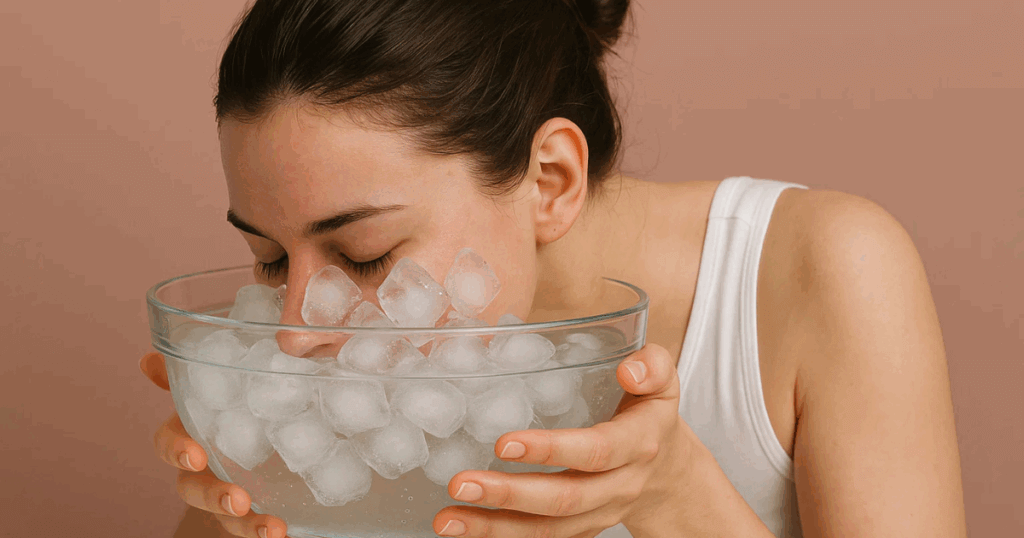
The facial ice dip is a minimal, Do-It-Yourself ritual which is currently dominating TikTok, X, and wellness circles around the globe. Reading descriptions of it, it seems it is not for the faint-hearted! This is because it involves filling a bowl with water and ice, and submerging your face for 20 to 30 seconds.
Those who have dared embrace this chilling treatment swear by its benefits. They love it for its immediate and visible results. Though it may sound brutal, it has become one of the hottest trends in skincare.
Still, while it may be trending now, the roots of facial ice therapy are surprisingly ancient. The act of applying cold water or ice to the face isn’t a new phenomenon. It has a long history in various cultures. Ancient Chinese medicine practitioners used cold water to stimulate circulation and rebalance the body. There were also certain 17th-century European beauty rituals which involved both the use of ice and snow! Russian and Scandinavian traditions celebrate the invigorating effects of cold exposure. In Nordic countries, alternating between hot saunas and icy plunges has long been seen as a practice for physical rejuvenation and mental clarity.
Hollywood stars in the mid-20th century, such as Joan Crawford and Marilyn Monroe, were said to have soaked their faces in icy water to reduce puffiness and tighten their skin before photo shoots. And so the concept of ice water used for beauty and medicinal purposes has existed in some form or other for centuries.
However, it appears a new generation of icy-faced devotees has arisen and you don’t need to look further than social media to find them!
The Science Behind The Freeze
You have possibly already tried splashing cold water on your face. Many women do this when they need colour in their complexion and to make their appearance brighter, usually, after a late night, for example.
There is a reason why dunking your face in ice water is beneficial. What happens when you immerse your face in ice water is something called ‘vasoconstriction’. This is the narrowing of blood vessels due to the cold.
This process helps reduce puffiness, especially under the eyes, by minimising swelling and fluid retention. Once the skin rewarms, the blood vessels dilate, increasing blood flow and delivering nutrients and oxygen more efficiently. This cycle creates a temporary ‘glow’ and can leave the skin looking more even-toned and refreshed.
Dr Rashmi Shetty, a well-known cosmetic dermatologist at Ra Skin & Aesthetics, supports the practice. “While the trend’s popularity can be attributed to a simple case of social media working its magic, I would recommend it. The shock that ice dips give your skin is quite beneficial as it leads to better nutrient absorption, detoxification, and improvement in the skin’s inflammatory response.”
There’s also a psychological component. Cold exposure has been studied for its effects on mood and mental clarity. A study published in the International Journal of Circumpolar Health found that brief exposure to cold water could lead to improved stress response and elevated mood due to the release of endorphins.
For many, the icy plunge is not just about glowing skin but also about resetting the mind.
The reason why these facial ice dips have suddenly become more popular can in many ways be credited to the dramatic visuals put forward on social media. There has also been backing by celebrities, such as Bella Hadid, who shared her love for cold therapy in a now-viral post. She revealed how she starts each morning with an ice facial to reduce inflammation and prepare her face for make-up.
Other influencers, among them Hailey Bieber and Irina Shayk, incorporate ice baths and facial plunges into their beauty routines.
A Growing Trend Towards ‘Skinimalism’
A new beauty term, ‘skinimalism’, was recently coined. This word defines the current trend away from heavy make-up and elaborate routines, towards simpler, more natural beauty habits. It has come as a response to the recent pandemic, with people now focusing more on wellness and health than beauty which comes at the expense of health. You could say this treatment falls into the skinimalism trend. At the same time, it is accessible and available to everyone.
Still, there are high-end spas and facial bars in the UK and the United States offering other versions of the treatment.
These aren’t your basic bowls of ice water. Mostly, they are part of multi-step cryo facials, and often paired with lymphatic drainage, LED light therapy and hydrating serums.
To give examples, London’s FaceGym offers ice-cold oxygen treatments designed to mimic the benefits of an ice dip. In Los Angeles, the wellness-focused Remedy Place offers full-body cold plunges. These include guided facial submersion techniques. The treatment is popular with wellness enthusiasts and celebrities alike.
Additionally, beauty boutiques are now selling ice globes. These are reusable cold therapy wands which simulate the effects of facial icing with a touch more glamour. These tools can be stored in the freezer and rolled across the face in upward motions. This delivers similar circulation-boosting benefits without the splash.
It is always advisable to consult professionals before beginning any new beauty routine. This same applies to facial ice dips. Some dermatologists have warned against overuse of this routine.
“If done too often or for too long, ice facials can cause broken capillaries, especially in people with sensitive or fair skin,” says Dr Shereene Idriss, a board-certified dermatologist in New York. “It’s best to limit exposure to about 20 seconds and to listen to your skin.”
In a world that never stops, sometimes the best thing you can do is stop, take a breath, and take the plunge. Just don’t forget a towel!