
The timeless elegance of Indian beauty tradition can be unlocked through ubtan. This is a centuries-old herbal blend revered for radiant skin and cultural richness.
It has natural origins and multiple purposes, which is why it is so celebrated.
Indian actress Priyanka Chopra Jonas has shared her love for homemade Ubtan masks, passed down by her mother. “My mom used to make a homemade Ubtan with turmeric, whole wheat flour, yogurt, and sandalwood. It was our go-to for glowing skin and exfoliation,” she says.
“Talk about skin care and we will all have memories of our grandmothers and mothers applying home-made ubtan on faces to get that beautiful glow before a wedding or festivities…” says an article in the Times of India. “It would definitely leave the skin glowing like the moon. All they needed to do was apply and gently massage till it spread evenly, followed by drying and rinsing. Well, the simple formula still holds the power to add a natural glow to the skin.”
However, this Ayurvedic treasure is now crossing cultural barriers, and captivating a new generation of skincare enthusiasts. Homemade ubtan face masks, as well as commercial ubtan facials and face washes, are now trending.
What Is Ubtan?
Ubtan is an Ayurvedic paste traditionally made using natural ingredients such as chickpea flour (besan), turmeric, sandalwood powder, and aromatic herbs. It has deep roots in Indian culture, particularly in pre-wedding beauty routines, where it is applied to the bride and groom to purify, exfoliate, and beautify their skin before marriage.
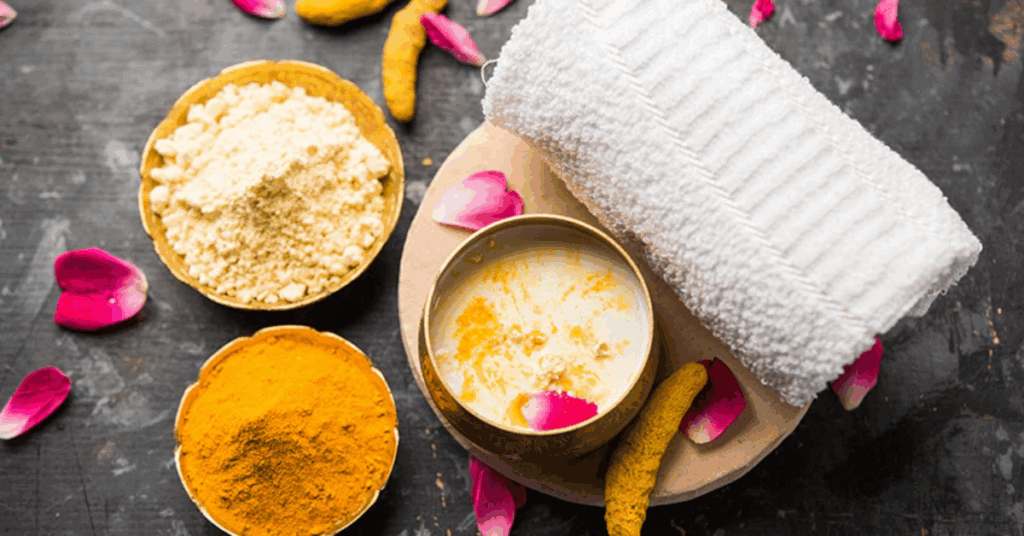
Ubtan is also seen as a symbol of wellness. Its ingredients have been chosen for their specific healing and beautifying properties. They work synergistically to brighten skin, control oil, reduce blemishes, and enhance natural glow.
The turmeric provides anti-inflammatory benefits, the besan gently exfoliates, and the sandalwood soothes and tones.
DIY Ubtan Face Mask
Creating an ubtan face mask at home is both simple and effective. Beauty enthusiasts on platforms like Reddit frequently share glowing reviews following creating their own ubtan masks.
One user writes, “It always works and makes my skin soft, moisturised and glowy.”
The appeal lies in its simplicity and how it merges exfoliation and nourishment naturally, without the need for synthetic ingredients or harsh chemicals.
For a simple and effective at-home ubtan treatment, combine:
- 1 tablespoon chickpea flour (besan)
- 1/4 teaspoon turmeric powder
- 1/2 teaspoon sandalwood powder (optional)
- 1 to 2 teaspoons milk or plain yogurt (adjust for consistency)
- A few drops of rose water (optional, for added hydration and fragrance)
Mix all of the ingredients into a smooth, spreadable paste. Apply evenly to the cleansed face and neck, avoiding the eye area. Leave it on for ten to 15 minutes, then gently massage in circular motions to exfoliate before rinsing off with lukewarm water. Use once or twice a week for best results.
Ubtan Facial, Face Wash, and Face Mask
Ubtan has also transitioned into a variety of retail beauty products. Commercially available ubtan face masks, ubtan face washes, and instant facial packs are now widely sold by Indian and international brands.
For example, the IBA Ubtan Instant Facial combines saffron and sand-clay in a cream-based pack that delivers a salon-like glow at home. The product is halal, vegan, and designed for quick results.
Mamaearth’s ubtan face mask is another popular option. Featuring turmeric, saffron, and apricot oil, it is designed to reduce tanning, brighten skin tone, and soothe irritation. Available through UK retailers such as Vision Pharmacy, users have reported an ‘instant boost in glow’ after a single application.
Ubtan face washes provide another convenient entry point. These products offer gentle daily exfoliation and cleansing. However, as users on Reddit caution, daily scrubbing may be too abrasive for sensitive skin, and weekly use may be more appropriate for optimal results.
Before and After: Visible Transformation
One of the reasons for ubtan’s renewed popularity is the remarkable before-and-after transformations shared online on social media platforms. Users often post photos showing clearer, brighter, and smoother skin after regular use of ubtan products. A reviewer who used a turmeric and sandalwood DIY mask noted significant improvements in skin tone and texture within weeks.
Still, in spite of these visible differences, Ubtan’s appeal lies in more than just its glow-enhancing properties, but also in the cultural richness and history which comes with every application. Historically, ubtan was prepared fresh before each use, often by elderly women in Indian households. Its application was a celebration of inner and outer wellness.
As global beauty trends continue to shift towards authenticity, sustainability, and wellness, the ancient Indian beauty secret, ubtan, remains a shining example of how traditional remedies can find new relevance in the contemporary world.