

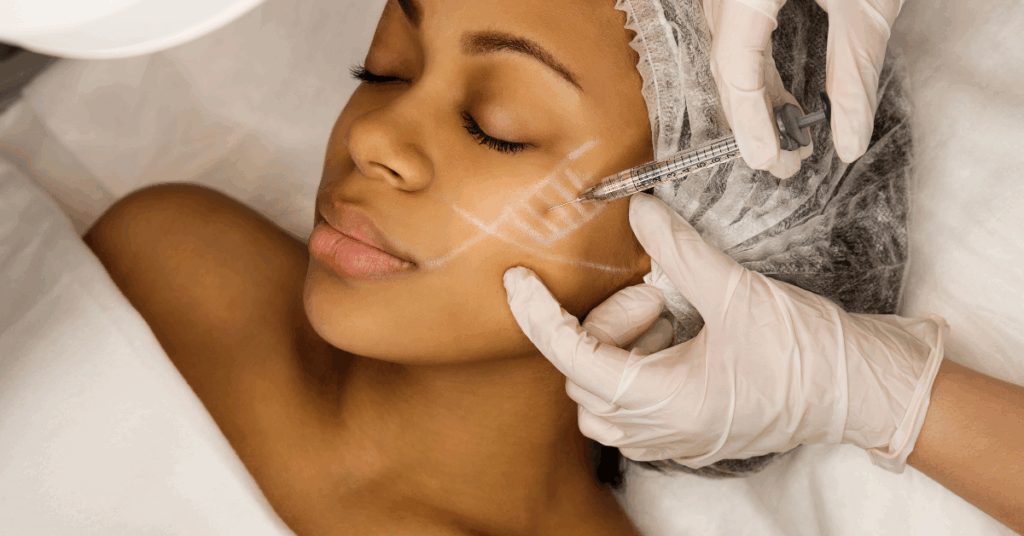
Dermal filler removal has become a growing trend online. Driven by influencers and celebrities, the filler removal movement has taken social media by storm. Social media platforms such as TikTok and Instagram have set the stage for beauty industry enthusiasts who are sharing how they have opted to do away with their fillers. This is actually possible and one of the reasons why fillers are so desirable as a treatment option.
The hashtag #fillerremoval has collected over 200 million views on TikTok alone. Here, videos document the entire filler removal process. It can be quite interesting scrolling through some of the testimonies and reading how people have seen themselves through new eyes, in choosing to take control of their appearance and have their fillers removed.
According to Dr Shirin Lakhani, founder of Elite Aesthetics: “There has been a 40% increase in filler dissolving appointments over the past year.” Furthermore, clinics across the UK and US have reported a steady rise in clients requesting dissolving services. These requests come as part of a broader journey toward a more understated, authentic appearance.
Even celebrities are having their fillers removed. Realself says: “Celebrities might have access to the best doctors and aestheticians, but that doesn’t mean they don’t feel regret. And under the societal pressure to maintain a more sculpted or youthful appearance, some can end up with an overfilled look or just get filler that they don’t actually need. In recent years, more and more celebrities have opened up about getting their facial filler dissolved, which is typically done using hyaluronidase (and possibly only with hyaluronic acid–based dermal fillers).”

Actress Courteney Cox, who had her fillers dissolved, said: “I didn’t realise that I was looking really strange with injections and doing stuff to my face that I would never do now.”
Dr Maryam Zamani, a London-based oculoplastic surgeon and aesthetic doctor, explains: “Filler removal has become a crucial part of maintaining natural aesthetics.” She says that while many people have fillers removed to fix mistakes, there are many patients who want to feel in control of their appearance again.
Dermal filler removal is a non-surgical cosmetic procedure which allows individuals to reverse the effects of injectable fillers. These fillers have been implemented to contour facial features, plump lips, or smooth wrinkles.
The majority of modern fillers are made from hyaluronic acid, a sugar molecule naturally found in the skin and connective tissues. What makes hyaluronic acid unique is that it can be dissolved using an enzyme called hyaluronidase.
Once injected, hyaluronidase breaks down the filler into smaller particles which are safely reabsorbed by the body. According to a 2023 study in the Journal of Cosmetic Dermatology, the enzyme can begin working within 24 hours, with full effects typically visible within a few days.
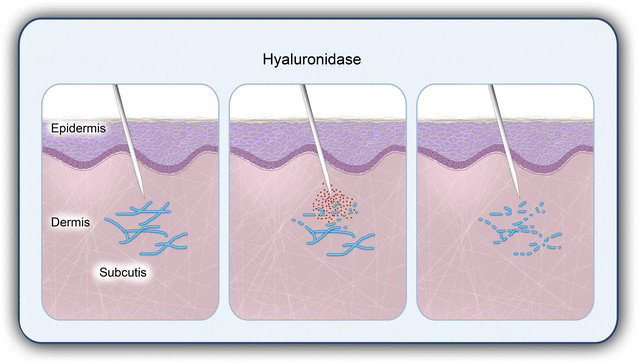
Dermal filler removal involves different techniques based on the type of filler used and the specific situation. One common method is enzyme-based removal, where enzymes are injected to break down the filler so the body can naturally eliminate it.
For hyaluronic acid-based fillers, which are the most widely used, a targeted enzyme called hyaluronidase is often used to dissolve the filler quickly and precisely.
The Appeal Of Reversible Procedures
One of the most appealing features of hyaluronic acid-based fillers is their reversibility. Unlike permanent surgical procedures, which involve significant downtime and often irreversible changes, fillers offer a flexible solution.
“Being able to reverse a cosmetic enhancement is a sought-after benefit,” says Dr Steven Harris, a well-known facial aesthetics expert. “It gives patients the confidence to try enhancements without the anxiety of permanence.”
This flexibility is especially important in a world where beauty trends shift rapidly.
The reasons people choose to dissolve their fillers vary widely. A leading cause is ‘filler fatigue’. This is a term used to describe the distorted or puffy appearance which can result from years of overuse. In a 2022 survey by the American Society for Dermatologic Surgery, 23% of filler patients reported feeling that their appearance had become less natural over time.
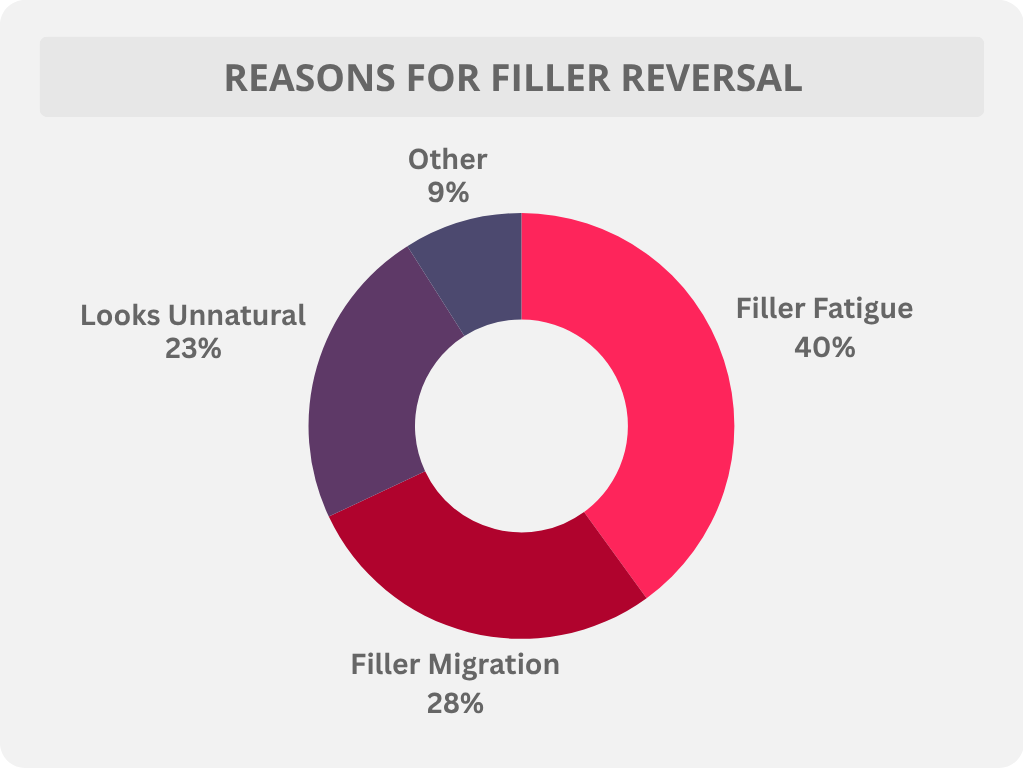
Filler migration is another common issue. This occurs when the filler moves away from the injection site, often due to gravity, muscle movement, or improper injection technique. It can lead to an uneven or distorted look, particularly around the lips or under the eyes. Some people also develop unwanted lumps, swelling, or delayed allergic reactions.
There’s also a growing cultural shift toward natural beauty. Many individuals now say they simply want to look more like themselves.
The Fascination With Before-And-Afters
Visual storytelling is a powerful tool in the beauty industry, and filler removal has its own compelling version of it. Before-and-after photos are everywhere, offering stark reminders of how facial volume, balance, and expression can be restored by simply removing excess filler. These transformations often carry emotional weight.
“I finally feel like myself again,” reads one viral Instagram post from a 32-year-old woman who had her cheek and lip fillers removed after five years of use. Such testimonials reflect deeper shifts, not just in appearance, but in confidence and self-acceptance.
These stories also inspire others to evaluate their own cosmetic choices. “It’s not about shame,” says aesthetics nurse Lorna Bowes. “It’s about recalibration. People want to see themselves in the mirror, not a trend.”
Fillers still play a major role in aesthetic medicine, with over 3,4 million treatments performed in the US alone in 2023, according to the American Society of Plastic Surgeons. But the surge in dissolving procedures signals a growing preference for control, subtlety, and natural beauty.