


The delicate area under our eyes, also known as the tear trough area, is one of the first facial zones to show visible signs of ageing. Whether it be in the form of dark circles, fine lines, puffiness, or hollowness, all of the above can create a tired, aged appearance.
This is because (to name but a few reasons), the skin under the eyes is the thinnest on the body, with fewer oil glands and less collagen. This makes it more prone to wrinkles, sagging, and dryness. It also has less subcutaneous fat and weaker muscles, which means it has less structural support. Over time, this then leads to hollowing, bagging, or a sunken appearance. Plus, the under-eye area is more prone to fluid retention and poor lymphatic drainage, causing puffiness and dark circles that can also worsen with age.
And even though ageing is inevitable, and our under-eye area is susceptible to biological and structural vulnerabilities, we can still make our eyes glow and look youthful thanks to Platelet-Rich Fibrin (PRF).
PRF In A Nutshell
PRF is very similar to PRP (Platelet-Rich Plasma). For those who are not aware of what PRP is, it was invented in the 1990s and laid the foundation of PRF. The PRP process involves drawing a small amount of your blood and then processing it in a centrifuge to separate the plasma rich in platelets from the rest of the blood components. This concentrated plasma contains growth factors and proteins that help accelerate tissue repair and regeneration.
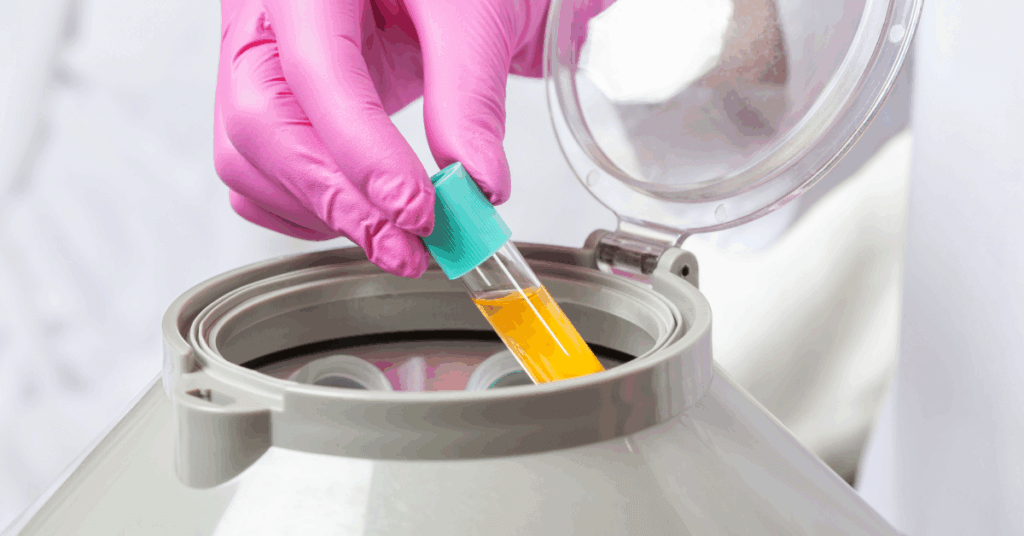
Fast forward to 2001, Dr Joseph Choukroun, a French anesthesiologist, introduced PRF as an improvement over PRP. Differences between the two include anticoagulants are used in PRP and no additives or anticoagulants are used in PRF. This means PRF is completely natural. As mentioned prior, PRF is also made from your very own blood (roughly 10 to 20 mL is drawn) and spun in a centrifuge (usually for around 3 to 8 mins) to create a fibrin clot or liquid PRF rich in platelets, white blood cells, and growth factors.
One of its main benefits is that it slowly releases healing proteins over 7 to 10 days, while PRP releases them right away. This slow release helps support longer-lasting healing.
| Feature | PRP (Platelet-Rich Plasma) | PRF (Platelet-Rich Fibrin) |
| Preparation Method | Blood is centrifuged at higher speed with anticoagulants. | Blood is centrifuged at lower speed without anticoagulants. |
| Additives | Requires anticoagulants (e.g., citrate). | No additives or anticoagulants used. |
| Platelet Concentration | High concentration of platelets. | Moderate platelet concentration, but more gradual release. |
| Growth Factor Release | Immediate release; peaks within hours. | Slower, sustained release over 7–10 days. |
| White Blood Cells | May contain few or no WBCs. | Contains white blood cells and stem cells. |
How Undereye PRF Restores And Rejuvenates Your Eyes
Since PRF helps your body produce more collagen, heal damaged tissue, and improve blood flow, it can gradually improve your skin tone, smooth fine lines, thicken the skin, and reduce dark circles when injected under the eyes.
The process is quick and fairly painless. The under-eye area is cleansed and sometimes numbed with a topical anaesthetic. A blunt-tip cannula (preferred for safety and less bruising) or a fine needle is used to gently inject PRF into the tear trough area.
But the million dollar question on everybody’s mind, does it REALLY work? Let’s have a quick look at its overall efficacy.
A 2020 study in the Journal of Cosmetic Dermatology looked at how PRF injections helped 20 patients with under-eye hollows. After 3 treatments, each 4 weeks apart, 85% of the patients saw better dark circles and skin quality. No serious side effects were reported. Another review, published in 2021 in the Aesthetic Surgery Journal, found that PRF helps the body make more collagen and gives longer-lasting skin results than PRP because of its special fibrin structure.
Plus, most patients are very happy with the results. A survey by the American Academy of Facial Esthetics (AAFE) found that 9 out of 10 people saw noticeable improvements and natural-looking changes 6 to 12 weeks after getting PRF treatment under their eyes.
But Are There Any Side Effects?
Because PRF is made from your blood, there is almost no chance of an allergic reaction or immune problem. I.e. it is generally considered safe and biocompatible, with 70% to 90% of patients experiencing no side effects following PRF treatment. And when it comes to allergic reactions, they occur in less than 0.1%.
However, like any procedure, some side effects can occur. For PRF, these are usually mild and temporary, such as swelling, bruising, mild discolouration, or puffiness, especially during the first 2 days after treatment.
PRF For Undereyes: A Quick Overview
Platelet-Rich Fibrin combines science, safety, and natural healing to offer patients an effective way to combat under-eye hollows, puffiness and wrinkles.
With minimal downtime, low risk, and gradually unfolding results, PRF truly stands as one of the most promising innovations in aesthetic medicine today.