

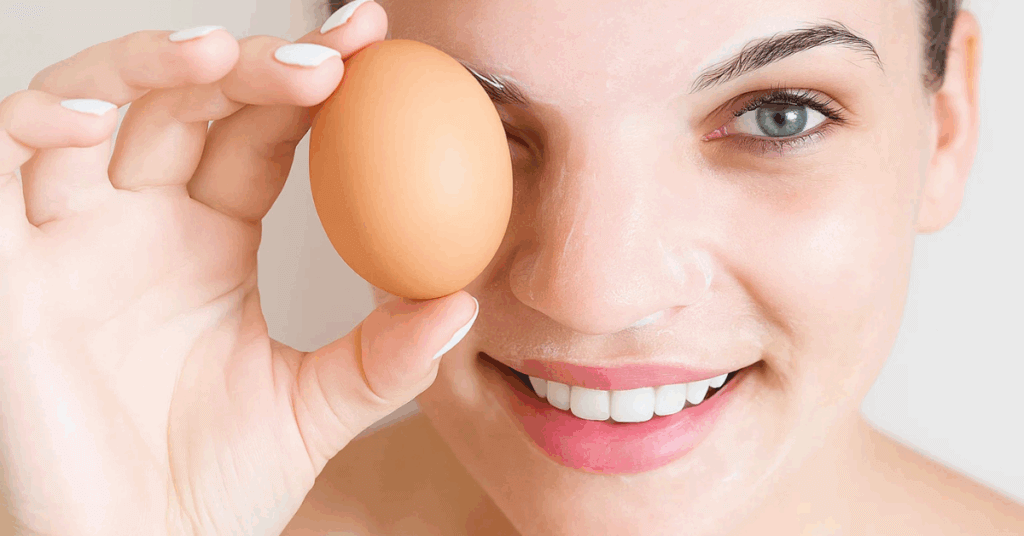
Egg white facials are currently in the spotlight in the world of beauty and aesthetics. This is because of their promise of a tighter skin, reduced pores, and a natural glow. Then there’s the fact that all of these claimed benefits come from a common kitchen ingredient: eggs.
Influencers and DIY skincare enthusiasts are praising egg white masks for their natural proteins and astringent properties. They say these facials can help mattify oily skin and temporarily smooth fine lines.
What social media enthusiasts love is how simple egg white facials are to make. That, and the fact that most people have an egg or two onhand.
I love being able to find a facial recipe I can make in my own kitchen, using ingredients I already have. There’s something deeply satisfying about taking something ordinary and whisking it together, and then relaxing with the concoction in your face, feeling just that much more beautiful.
If such a home-made concoction actually works, then you feel like you have hit the jackpot.
However, on reading about this facial, it seems many are questioning whether it is as effective as the influencers say it is, and whether it lives up to the hype.
How People Apply Egg White Facials
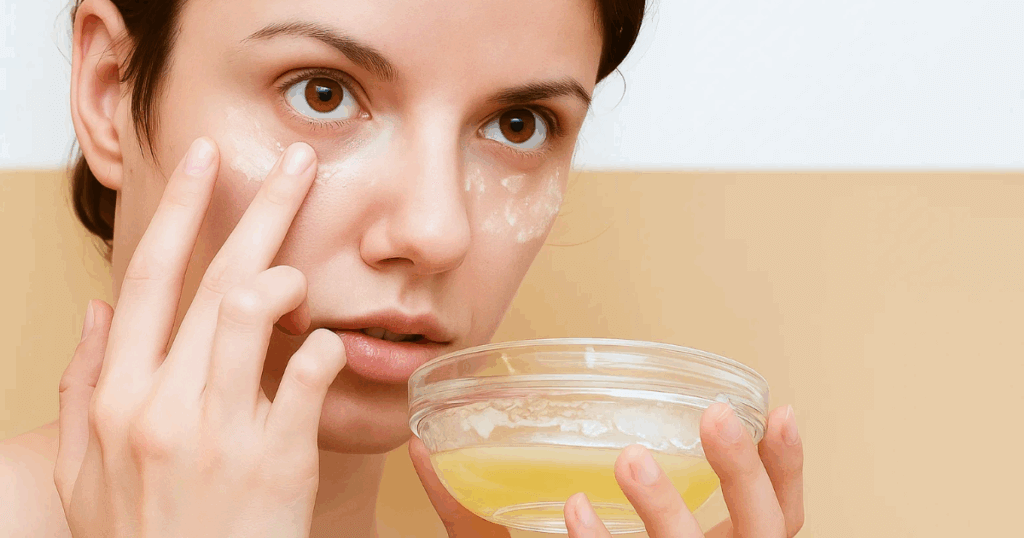
The typical DIY method is simple. Users first crack open an egg, and separate the yolk from the white. The white is then whisked until it is frothy. It is then applied onto clean skin using fingers, brushes, or even layering between thin tissue sheets.
Users usually leave it on for ten to 15 minutes until it dries and tightens, before rinsing off with warm water.
Some viral videos show users applying a second layer of egg white over tissue paper to enhance the peel-and-tighten effect .
Celeb aestheticians recommend variations like commercial masks which mimic the experience but include safer, controlled ingredients, such as albumin, aloe vera, peptides, and botanical extracts.
Proponents swear by the pore-tightening and oil-absorbing effects of applying raw egg whites to your face. However dermatological professionals are more wary.
Melanie Abeyta, an aesthetic nurse practitioner in Los Angeles, cautions that egg white facials pose a risk of allergic reactions, even for those who aren’t allergic when eating eggs, and may irritate sensitive or broken skin.
Dr Rachael Robertson, founder of Bedew Skin in the UK, is quoted saying in the Daily Star: “Egg white does contain the enzyme lysozyme which could break down bacteria on the skin… but the benefits are very limited in comparison to a product designed for purpose.”
She continues: “Due to the protein content, it could make your skin feel a bit tighter, but this would only be temporary… Not to mention that while the risk of salmonella is low, it’s not impossible.”
Egg whites are primarily water (roughly 90 percent) and proteins (mainly albumin), and some believe these proteins temporarily firm the skin by creating a drying film once dried.
The sticky layer may feel tightening and brightening, but experts argue this effect is purely superficial and short-lived . Proteins in egg whites can’t penetrate the skin barrier, and any ‘pore shrinking’ is illusory, they say. Even lysozyme, an enzyme in egg whites, has minimal antibacterial action topically and no proven efficacy against acne-causing bacteria.
A History On Egg-Based Facials
Egg-based facials aren’t entirely new in the history of natural skincare. Many home remedies across cultures use whole eggs, egg whites or yolks to condition skin. These include traditional European farmhouse beauty practices,as well as Asian folk treatments.
Women in rural France and Germany would often whip egg whites into masks to firm the skin before social events. They used the natural tightening effect as a form of primitive anti-ageing treatment.
Yolk-based masks, rich in fats and vitamins like A and D, were favoured for dry or mature skin, often blended with honey or cream to restore suppleness during harsh winters.
In Asia, eggs have played a role in centuries-old folk beauty treatments, especially in regions like China, Korea, and Japan.
In Chinese herbal medicine, egg yolk was sometimes mixed with pearl powder and rice water to brighten and soften the complexion.
Korean women historically used crushed eggshell membranes, which are rich in collagen, as a skin-smoothing remedy. In Japan, geishas were known to use egg white masks to create a porcelain-like finish, often combined with rice bran or green tea for added benefits.
These practices underscore how egg-based facials have a long legacy rooted in practical, culture-specific beauty traditions which pre-date modern dermatology.
The modern twist comes through social media. Creators like @byzareefa and @selinadasilvaa have popularised methods, such as whipped egg-only masks and ‘tissue sandwich’ layering techniques, promising a temporary ‘tight’ sensation and smoother texture.
According to a VICE report, some users have claimed benefits like oil control, pore reduction, and acne prevention, although these remain anecdotal.
Why It’s Gone Viral
Part of the trend’s appeal is its low cost and simplicity. An egg costs a few cents, and for many pursuing cost-effective self-care, it fits a frugal lifestyle.
The dramatic tightening effect when dried and peeled off plays well in short-form video content, offering satisfying visual results. BeautyTok thrives on easy hacks and visually compelling transformations, and egg white facials deliver both.
However, a key ‘aha’ moment is that proteins from egg whites cannot penetrate the skin’s outer layer, meaning any perceived firming is temporary and skin-deep . Historical applications of whole eggs in skincare used yolk’s fats for moisturising. Egg whites for skin tightening remain more of a myth than a medically-supported technique .
The egg white facial craze may catch the eye with its theatrical flair and affordability, but without scientific backing and with real health risks, it remains a controversial treatment.